Corn Smut: Midwest Farmers Turn Fungal Crop Defect Into $18.49 Per Pound Specialty Item
St. Louis chefs and grocers are capitalizing on rising heat and humidity levels that encourage the growth of huitlacoche, a edible corn fungus.
By Alessia Romano ·
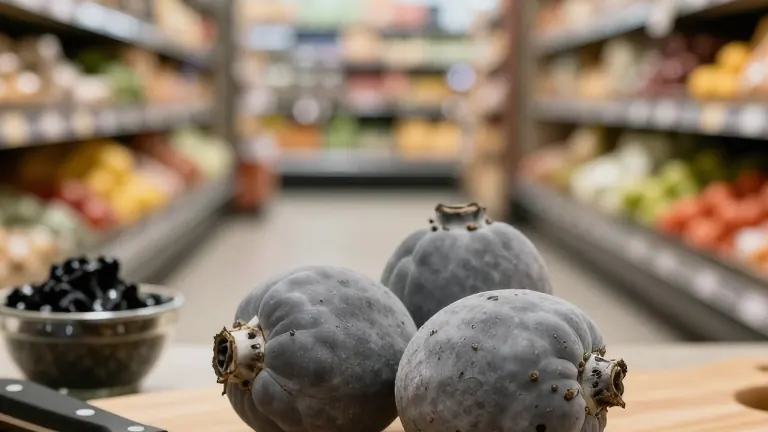
St. Louis consumers now face a new premium option on grocery shelves: huitlacoche, a fungal growth on corn that sells for $18.49 a pound at Local Harvest. The price places the product among the most expensive produce in the store, yet manager Becca Widzer reported no issues with sales. Widzer noted that the customer base is generally familiar with niche food products and willing to pay for novelty. She initially placed the item next to the corn but acknowledged it could also fit in the mushroom section. The first year of stocking the product has seen strong uptake from diners seeking unique ingredients.
The supply chain for this crop involves anonymous brokers who travel to rural communities to collect the product. One such broker drove a U-Haul to an Old Order Mennonite community outside Fredericktown, Missouri, to purchase infected corn ears. These farmers typically sell standard produce at the Home Gardens Community Market in Farmington. Ephraim Brubaker, the market manager, stated that the community previously viewed the blue-tinged growths as a field defect. Now, they sell the galls for $10 a pound, a direct increase in revenue from a previously discarded crop. The broker acts as an intermediary, transporting the product from these small-scale farms to urban markets and restaurants.
The expansion of the huitlacoche market correlates with shifting climate patterns in the Midwest. Dilip Shah, a scientist at the Donald Danforth Plant Science Center, explains that the fungus acts like a tumor, causing uncontrolled growth of corn tissue. This process requires extreme heat followed by heavy rain. Trent Front, the Illinois state climatologist at the University of Illinois, confirmed that average growing season temperatures and humidity levels have increased. Front predicts that warmer and more humid conditions will become more common over the next two to three decades. These weather patterns make fungal growth more likely, potentially increasing the supply of huitlacoche for commercial harvest.
Restaurant operators are integrating the ingredient into high-end menus. Adrian Maldonado, executive chef at Malo in St. Louis, serves the fungus as the first course in his eight-course tasting menu. He prepares it by cooking the galls in butter until the spores turn black, then adding lime and salt. Maldonado attributes the rising demand partly to the growing Latino population in St. Luis, a trend supported by census data. He sources his product from the same anonymous broker who supplies local grocers. The dish is served on a nixtamalized heirloom corn tortilla. Maldonado stated that half of his diners are already familiar with the food, while he educates the rest on its history.
Beverage producers are also adapting the ingredient. William Esslinger, owner of Confluence Kombucha in St. Louis, creates a fermented drink using huitlacoche and chanterelles. He described the process as combining mushroom with mushroom. Esslinger, who has been brewing kombucha since 2009, uses humor to overcome customer hesitation regarding the unusual ingredient. He bottles the mixture to age for several days before serving. The shop already offers a shiso-accented version on tap. Esslinger views the product as a way to preserve food history and reduce waste in agricultural fields.
The commercial interest in huitlacoche reflects a broader shift in how Midwestern producers handle crop imperfections. What was once considered a disease is now a specialized commodity. The combination of higher prices, dedicated supply networks, and favorable weather conditions has created a viable market for the fungus. Farmers receive higher returns for infected ears, and chefs gain a distinctive ingredient for their menus. The sector is currently in its early stages of commercialization, with limited but growing availability in retail and dining spaces across the region.
More Business · Consumer Watch · Report a business · Got a Story?