Jordan Valley fences restrict Palestinian herders as questions persist over construction
Palestinian communities say extensive fencing has cut access to grazing land, while Israeli military explanations face challenges from mapping and court proceedings.
By Luana Sato ·
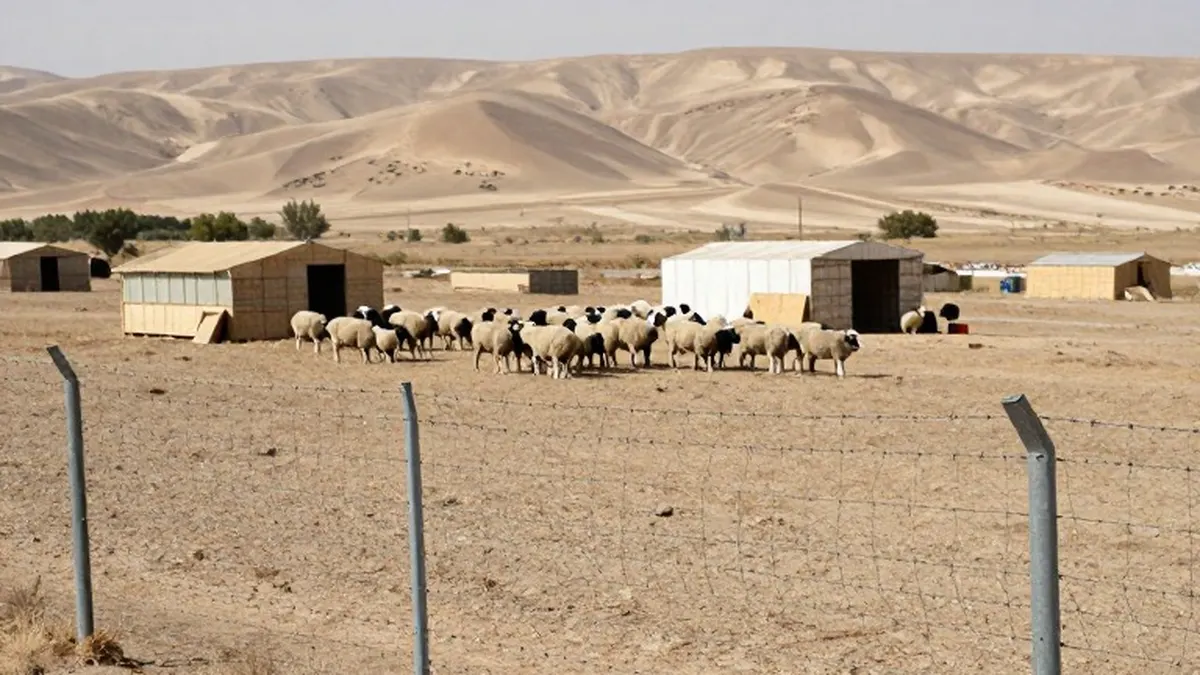
Kilometers of fencing across the Jordan Valley are restricting Palestinian shepherds’ access to grazing grounds, increasing feed costs and raising questions about who built the barriers. The Israeli military says it erected fences to secure training areas, but activists dispute whether that explanation accounts for their locations, and the state has acknowledged unauthorized construction in two court cases.
In al-Hadidiya, a northern Jordan Valley community of 60 residents, a man identified by the pseudonym Mohammad told The Times of Israel that he discovered people building a fence on his land in November 2025. He said the workers warned him to leave when he approached. The barrier extends several kilometers, largely separating residents from land used to graze their livestock without fully enclosing their homes.
Mohammad said the loss of access has made grazing his 300 sheep prohibitively difficult, leaving him dependent on costly purchased feed. A resident of nearby Khirbet Samra described a similar burden for his flock of 400 sheep. He said his barley purchases had risen from two truckloads annually to one every two months, with each approximately 20-ton load costing at least NIS 20,000.
Jordan Valley Activists, which assists Palestinian residents, said most of the fences it described appeared between summer 2025 and summer 2026, although some were older. Dror Etkes of Kerem Navot, who has mapped barriers across the area, estimated that approximately 60 kilometers of fencing block Palestinian and Bedouin access to at least hundreds of thousands of dunams. He said his mapping remained incomplete because fences crossing open terrain were harder to document.
The Israel Defense Forces told The Times of Israel that the barriers mark and enclose military firing zones. It cited safety incidents, including children being injured while playing with unexploded ordnance near training areas. The Defense Ministry’s Civil Administration also described the construction as a military operation. Etkes, however, said the fences overlap only partly with designated firing zones, with some located far from them.
Photographs and videos show construction by people in civilian clothing, including minors in several instances. Some builders wore shirts bearing the Artzenu organization’s logo. The organization, whose website describes support for settlement efforts, did not respond to the outlet’s inquiry about its involvement. Palestinians and activists suspect settlers built the fences to expand control over land. Asked about discrepancies in its account, the military said the matter remained under review.
The restrictions come amid wider displacement linked to settler violence and lost land access. According to the United Nations Office for the Coordination of Humanitarian Affairs, more than 2,000 people were displaced in the Jordan Valley between January 2023 and July 2026 because of settler violence and restrictions on access to grazing grounds and other areas. Eleven communities were completely displaced, including five in 2026.
Near Farsiya, residents challenged a fence in the High Court in August 2025. The state acknowledged that it was unauthorized, but removal followed only after further court intervention, according to their lawyer, Tawfiq Jabarin. Local residents said the military dismantled it on October 13, 2026.
A separate petition concerned fencing near Ein al-Hilweh, partly on private land belonging to the Latin Patriarchate. The state said that barrier was intended to keep animals off roads following fatal traffic accidents, but promised removal by October 28 after private ownership became clear. Activists reported that only part was dismantled on October 23. The remainder, along with kilometers of other fencing, was still standing.