Israeli Study Links Prehistoric Keepsakes to the Evolution of Personal Memory
Researchers suggest that objects collected by early humans may have helped preserve memories of experiences and influenced the brain mechanisms behind autobiographical memory.
By Alessia Romano ·
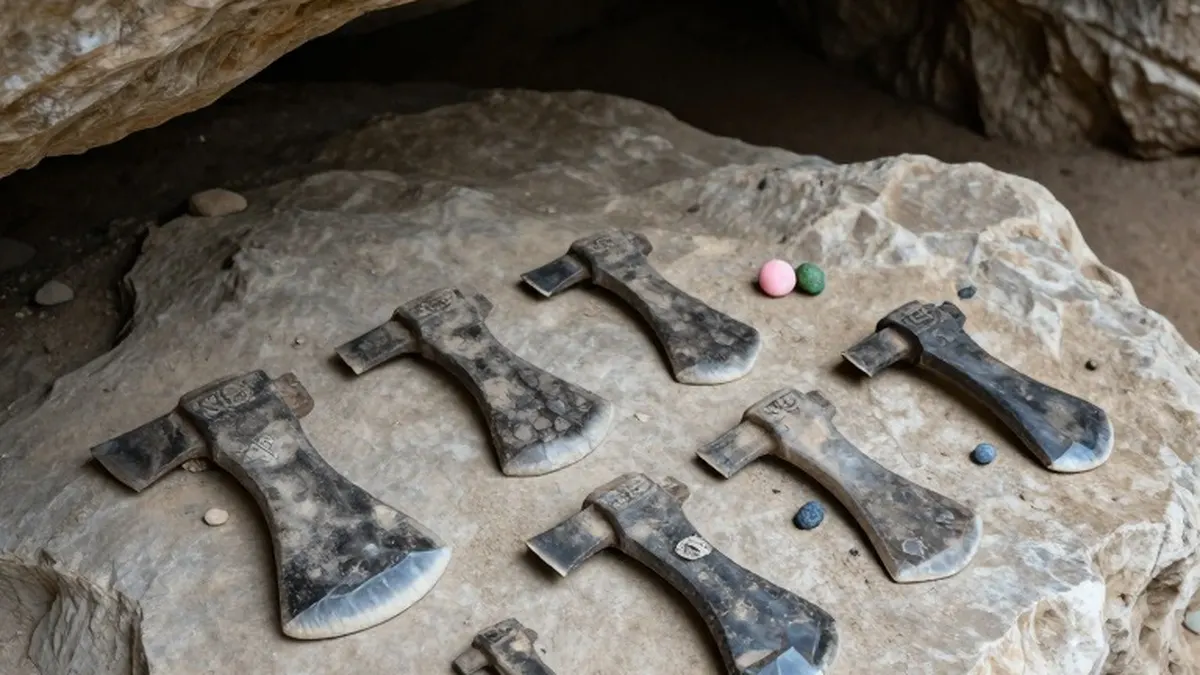
Early humans may have gathered keepsakes as long as half a million years ago to recall places and experiences, according to a new Israeli study. The researchers propose that collecting such objects could also have contributed to the evolution of autobiographical memory, the ability to remember events from one’s own life.
Published recently in Evolutionary Anthropology, the study examined collections of objects recovered from prehistoric sites in northern and central Israel. It was led by Dr. Yoav Ram of Tel Aviv University’s School of Zoology, Prof. Ran Barkai and Dr. Ella Assaf of its Department of Archaeology, working with Prof. Liad Mudrik of its School of Psychological Sciences and Dr. Bar Efrati of the University of Oxford.
The team combined archaeological evidence with evolutionary theory, psychology and neuroscience to consider why early humans retained objects that appeared to have no practical use. Their explanation is that some items served as personal reminders, connecting their owners to locations they had visited or experiences they wanted to remember.
At Revadim, Jaljulia and Qesem Cave, researchers examined tools that had been collected after their surfaces had undergone changes over time. Although some flint tools were sharpened again, much of their original surface and evidence of earlier workmanship remained intact. The researchers suggested that this aged appearance may itself have mattered to the people who kept them. Qesem Cave, near Kafr Kassem in central Israel, is believed to have housed early humans between about 400,000 and 200,000 years ago.
Finds from the Sakhnin Valley also informed the discussion. In an earlier study published this year, Barkai reported that the number of handaxes decorated and shaped around fossils and geodes surpassed comparable documented finds. He suggested that incorporating these geological features gave the tools additional meaning and connected them with ancient elements of the landscape.
The new study proposes that a keepsake’s appearance and texture could bring back memories associated with its place of origin. Those physical qualities might also have helped its owner distinguish a firsthand experience from something imagined or heard in a story. Over generations, the researchers suggest, this behavior could have increased evolutionary pressures on brain mechanisms that assess where memories come from and how reliable they are.
Barkai also linked the possible emergence of keepsake collecting to environmental change. As large animals, especially elephants, disappeared, early humans needed different hunting methods and familiarity with grounds inhabited by fallow deer and wild cattle. Objects gathered there may have helped sustain a personal connection with places that became important sources of food.
The authors stressed that their explanation remains a hypothesis and does not establish that every unusual prehistoric stone was a keepsake. Ram nevertheless suggested that bringing a colorful stone or an old tool back to a cave could have preserved the memory of a significant encounter or event, allowing objects to support the development of personal memory and identity.