Pilot and attorney question Learjet route through Florida storms
Mike Slack says a six-minute delay via Jacksonville would have avoided the weather that killed the crew.
By Alessia Romano ·
The Learjet 60 that crashed in South Florida on Sunday flew dangerously close to a severe thunderstorm system before losing control, according to Mike Slack. Slack is an aviation attorney and licensed pilot who reviewed the flight path and weather data. He argues the pilots made a specific routing choice that placed the aircraft in danger.
Slack told the Houston Chronicle that the jet entered the fringe of a "very developed" storm. He noted that the pilots had a clear alternative. A route through Jacksonville would have avoided the weather entirely. That path would have added only minutes to the total flight time. The chosen route through Miami saved six minutes but exposed the plane to heavy convective activity.
"Why put yourself in the situation when there was a north route that would have gotten you to North Eleuthera without any risk of weather?" Slack asked. He pointed out that the storm system was visible on radar before the plane took off. The standard of care for pilots in such conditions is to stay at least 30 miles from the edge of intense thunderstorms. Slack believes the crew did not maintain that distance.
The National Transportation Safety Board is leading the investigation. Officials with the agency said weather remains a major focus. The NTSB has not yet determined the cause of the crash. Slack said the crew reported light icing and moderate turbulence in radio communications with air traffic control. The outside temperature at the time was minus 47 degrees Celsius. He believes ice buildup or a powerful updraft may have triggered an abrupt stall.
Slack described the Learjet 60 as a difficult aircraft to fly in bad weather. He said the model has a reputation as a "widow maker" because pilots have struggled to recover from stalls during landing approaches. The design does not tolerate the loss of lift well. "Once that stall occurs in a Learjet 60..even an astronaut cannot recover that airplane," Slack said. He characterized a stall in this specific model as a death sentence for everyone on board.
The company operating the flight, Upper Jets, did not return calls or emails before the deadline. Slack emphasized that charter jets are safe in the right hands. However, he noted that pilots need specific experience with the "nasty habits" of the Learjet 60. He said the lack of correct experience in the cockpit is a common problem in this type of accident.
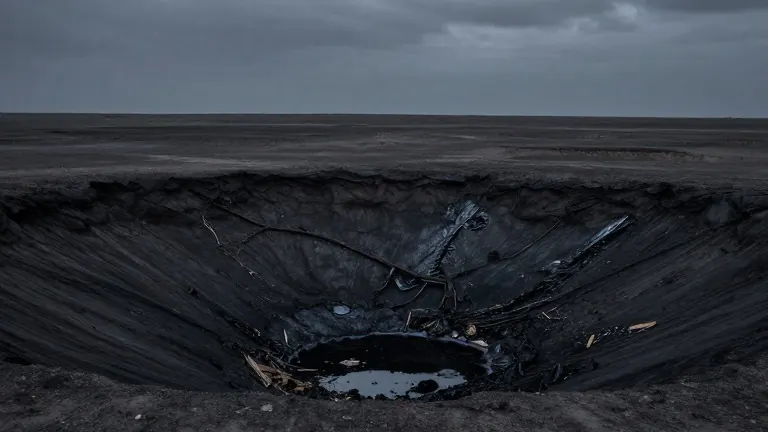
The onscene investigation is ongoing. The NTSB expects to access the crater on Wednesday. Slack said the impact was violent enough to scatter debris and hazardous material about a half-mile in all directions. The area contains fuel, oil, and other compounds that pose risks to people. Screening the site could take three to four weeks.
"The outcome is straightforward," Slack said. "The prelude to the outcome is an unknown." He expressed doubt that the debris in the crater will yield clear evidence. The material may be too damaged to be usable or decipherable. The investigation will continue as teams work to understand the sequence of events leading to the crash.