
Atmospheric Rivers Bring Intense Rain to Pacific Northwest
Successive atmospheric rivers are bringing heavy rain and flooding risks to the Pacific Northwest this weekend, coinciding with high tides and rising sea levels.
By Alessia Romano ·
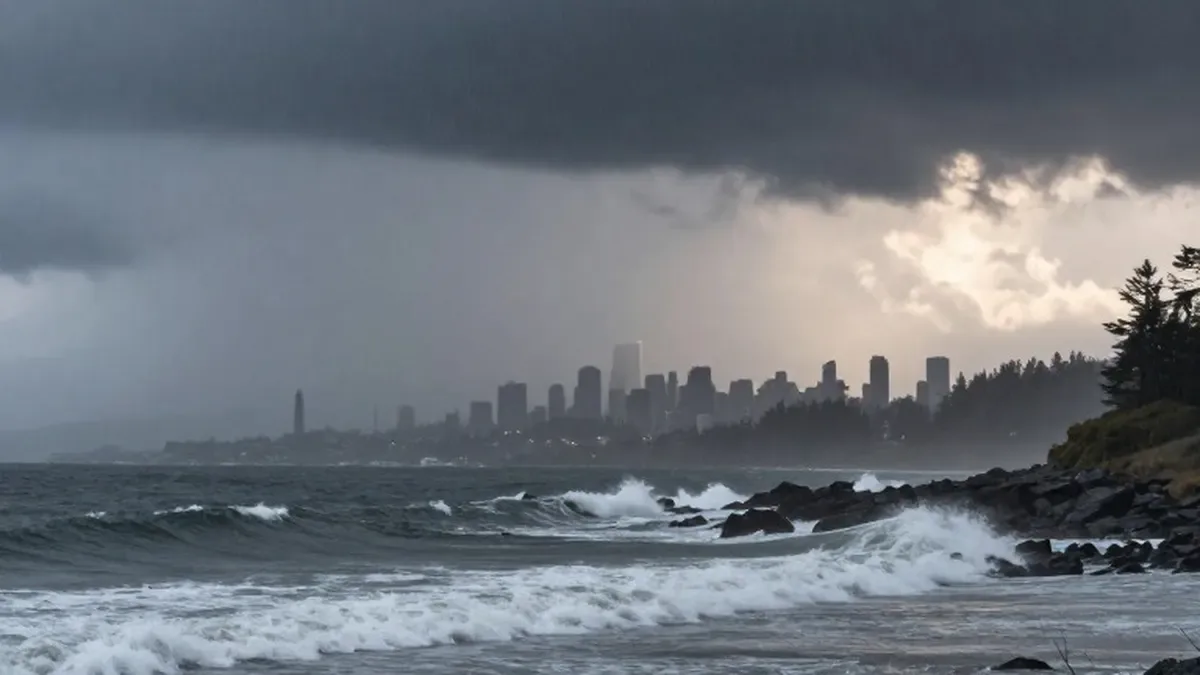
The Pacific Northwest is experiencing one of its wettest periods of the year, with heavy precipitation, high tides, and rising sea levels currently impacting the West Coast. The region is set to face further challenges as two distinct atmospheric rivers are expected to strike parts of Oregon and Washington state in succession on Friday and Saturday. These systems follow two others that already delivered several inches of rain to both states earlier in the week.
Meteorologists warn that the sequential nature of these weather events creates compounding impacts. Josh Weiss, a meteorologist at the National Oceanic and Atmospheric Administration's Weather Prediction Center, noted that the combination of multiple systems is particularly problematic. He identified flash flooding, urban flooding, and landslides as key risks associated with this weather pattern.
An atmospheric river is defined as a narrow band of water vapor driven by wind. These formations are loaded with moisture and can release significant amounts of rain or snow. According to F. Martin Ralph, director of the Center for Western Weather and Water Extremes at UC San Diego's Scripps Institution of Oceanography, these bands can stretch up to 2,000 miles in length and reach 600 miles in width.
Ralph described these formations as literal rivers in the sky. They are a natural climate pattern that plays a significant role in regional precipitation. Weiss added that approximately 50 to 60 percent of the rainfall in California is attributable to atmospheric rivers, highlighting their importance to the water cycle in the western United States.
While residents of the Pacific Northwest are accustomed to heavy downpours, the current conditions are intensified by other factors. Warm ocean waters associated with El Niño are contributing to rising sea levels and fueling storm systems. Additionally, these weather events are coinciding with annual high tides, known as King tides, which places coastal and inland waterways at heightened risk for flooding.
Data from the Federal Emergency Management Agency over the past 40 years indicates that atmospheric rivers are responsible for 90 percent or more of all flood damage in the Western U.S., according to Ralph. This statistical weight underscores the destructive potential of these weather systems when they make landfall.
Looking ahead to the weekend, Jeff Michalski, a meteorologist at the National Weather Service in Seattle, reported that Washington's coast could experience significant swells reaching 20 feet. Such conditions further exacerbate the flooding risks along the shoreline.
These weather events are often referred to by colorful nicknames such as the Pineapple Express or the Rum Runner Express, which indicate their point of origin. A recent Pineapple Express, which crossed the Pacific from Hawaii in late October, caused devastating flooding and multiple deaths in the Southwest's Four Corners region.
Although the term is most associated with the West Coast, atmospheric rivers are not exclusive to that area. Ralph noted that some larger nor'easters on the East Coast can also carry significant atmospheric river activity. The terminology has gained widespread recognition in news media and on social media in recent years, alongside other terms like El Niño and Kelvin waves.
Scientists continue to study the relationship between El Niño and atmospheric rivers. Ralph previously theorized in 2015 that warm El Niño waters might strengthen these rivers, but his research suggested otherwise. He stated that atmospheric rivers do not simply follow the patterns of El Niño. While climate scientists note that a warming world increases atmospheric water vapor, there is currently insufficient data to directly link specific weather events to human-caused global warming. Ralph emphasized the need to monitor these systems regardless of whether it is an El Niño, La Niña, or neutral year.
More News · National news · Report a business · Got a Story?