South Africa's ANC Faces Reckoning After Worst Election Result in Its History
After falling below 31% in local elections, the party that has governed since the end of apartheid is confronting public anger over jobs, services and corruption, and a political landscape that is shifting beneath it.
By Alessia Romano ·
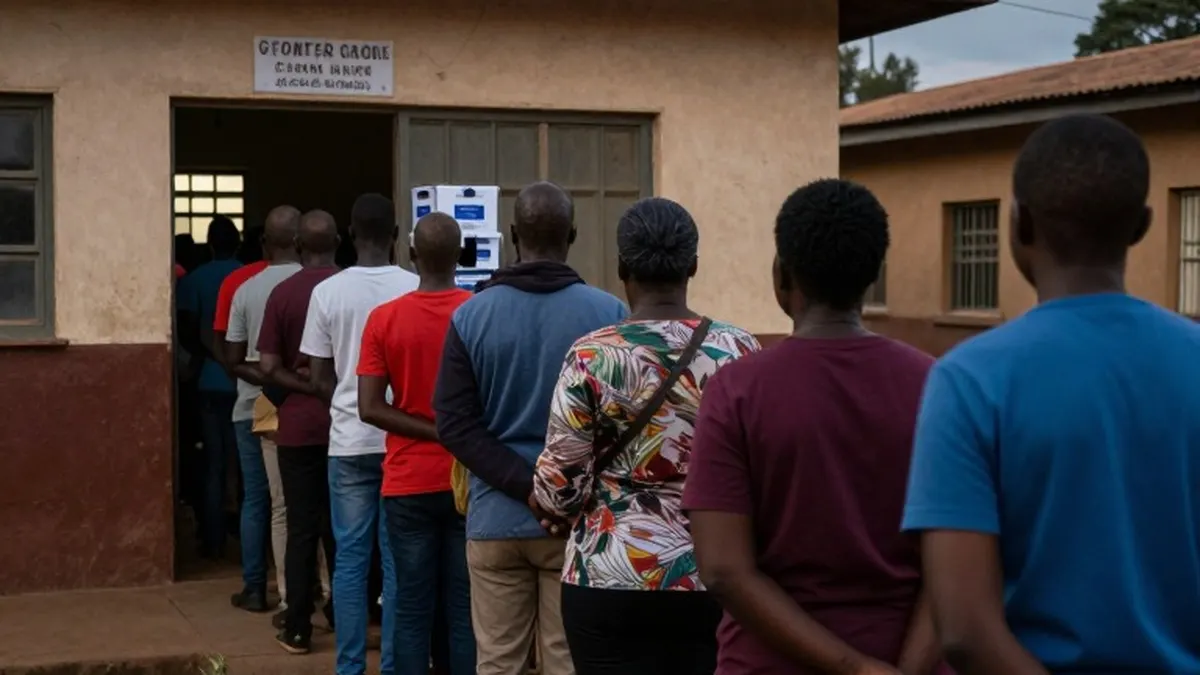
South Africa's governing African National Congress is facing its deepest electoral setback on record after winning less than 31% of the vote in the country's closely watched local government elections. Party leaders themselves have described the outcome as catastrophic for a movement that led the liberation struggle and has dominated national politics since the end of apartheid in 1994.
The result reflects mounting public frustration with the party's performance on skyrocketing unemployment, poor service delivery, failing local governance and years of graft and corruption, sometimes reaching the highest levels of government. The question now is what comes next, both for the ANC and for the country.
Tasnim Essop, a researcher at the Society, Work and Politics Institute at the University of the Witwatersrand in Johannesburg, said the moment calls for serious introspection and hard questions about governance, leadership and accountability. She told DW that the concerns driving voters are concrete and local: issues like water, electricity, housing and public services at the basic municipal level, adding that research has shown unemployment is also a major factor in how people choose to vote.
Essop stressed that the outcome did not happen overnight but reflects a slow erosion of confidence over a long period. DW correspondent Dianne Hawker-Kalubi, who reported from polling stations across the country, heard much the same, saying many voters expressed a lot of frustration and a lot of concern about basic services not being delivered for years. Mokhiri Phooko, a Cape Town resident, told Reuters that people are losing hope, asking of the governing party: "You promised us jobs, why [are] you not keeping up the end of your bargain," and noting that the unemployment rate has risen drastically in recent years.
The ANC has acknowledged that things must change. In a statement, the party said its National Executive Committee would hold a special meeting, citing the serious political responsibility to listen to the people, confront its shortcomings and provide leadership. It must also prepare a framework for coalition negotiations, in some cases with its biggest rivals, as it did after the 2024 general elections.
The results point to a broader realignment, with support spreading across multiple parties rather than concentrating behind one dominant force. The ANC remained the largest party nationally, but the Democratic Alliance strengthened its position in several major urban centers. The uMkhonto weSizwe party, launched by former President Jacob Zuma in late 2023, performed strongly in KwaZulu-Natal despite being new to the political arena, while smaller civic organizations and community-based movements recorded notable successes at the local level.
Essop describes the trend as growing vote fluidity, with voters increasingly willing to shift support between parties rather than stay loyal to one organization. Some observers see South Africans moving beyond liberation-era loyalties, but Essop urged caution: "I would be cautious to say that liberation politics are dead and gone," noting that many parties still draw legitimacy from that history even outside the ANC banner. In her view, the shift is not a wholesale rejection of the liberation narrative but a rising demand for effective governance.
President Cyril Ramaphosa framed the results as a challenge for every political party to come together and perform better for citizens. "[T]hose who have been elected to councils now need to prove themselves worthy of the trust placed in them by the South African people," he said in a statement.
The era of undisputed ANC dominance appears to be over, with voters showing a new willingness to back alternatives and punish parties they believe have fallen short. Whether the ANC can reverse its decline will depend largely on how convincingly it delivers improved public services and effective change.