Vance tests presidential tone in midterm rally tour
The vice president blends populist economics with cultural critiques while navigating the unpopularity of the current administration.
By John Ferrari ·
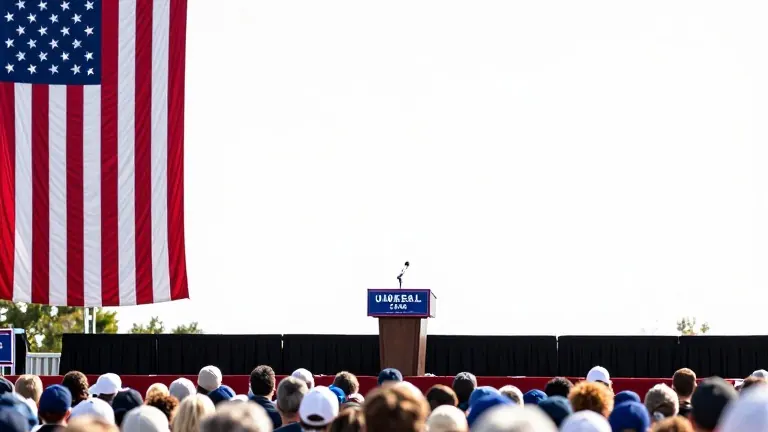
Vice President JD Vance is using his current campaign schedule to refine a political persona that blends traditional populist economics with the cultural warfare tactics of the Trump era. This approach offers a preview of the message he might deploy in a 2028 presidential bid. The strategy relies on a specific narrative: a nostalgic vision of American community that was eroded by distant political elites, now being restored by Vance’s brand of governance.
The vice president’s recent stops illustrate this dual focus. In Howell, Michigan, he used the example of small business sponsorship for local youth football teams to frame economic policy. He noted that many of the businesses that sponsored his childhood teams no longer exist. Vance attributed their disappearance to politicians in a faraway place who did not prioritize the needs of states like Michigan and Ohio. He argued that working-class families paid the consequences of those decisions.
This economic narrative is paired with a cultural argument about social cohesion. Vance describes a past where working-class Black and white children played football together without worrying about skin color or privilege. He positions this era of racial harmony as a baseline that has been disrupted by recent political shifts. In North Carolina, he invoked the national unity felt after the September 11, 2001 attacks, framing his political project as a return to that sense of fellowship and pride.
The delivery of this message varies by venue but maintains a consistent core. In Weatherford, Texas, Vance engaged directly with Democratic Senate candidate James Talarico. He mocked Talarico’s previous comments about grappling with his masculinity and whiteness. Vance told the cheering crowd that Talarico did not have much to grapple with. This jibe mirrored the combative style often employed by President Trump, suggesting Vance is comfortable adopting a similar rhetorical tone when engaging opponents.
The vice president faces a distinct challenge in promoting Republican candidates while serving under an unpopular president. This tension is most visible in how he addresses economic pain caused by administration policies. In Montana, Vance addressed high gas prices by comparing them to spikes seen in 1979, 2001, 2007, and 2022. He attributed the current prices to the general behavior of world leaders rather than the specific impact of the Iran War. He described the price increases as a recurring result of geopolitics, noting that they skyrocket whenever a dictator throws a tantrum.
Vance has also addressed the high cost of beef, a major concern for consumers. He framed the issue as a result of consolidation among meatpackers. This explanation allows him to sidestep the direct criticism that Trump’s own policies have angered beef producers. By pointing to industry structure rather than presidential decisions, Vance attempts to protect the administration from economic backlash while offering a concrete explanation for inflation.
Beyond campaign rhetoric, Vance is leveraging his role as head of the president’s anti-fraud task force to build his resume. The task force aims to identify malfeasance in social safety net programs. Vance uses these appearances to share his personal history of working as a cashier at Dhillon Foods in Cincinnati. He reminded the audience that he was a first-generation college graduate and that family members benefited from federal food programs. This biography provides him with a personal angle on economic struggle that differs from the president’s background.
The central question for the 2028 cycle is whether this more polished, eloquent version of populism can replace the unfiltered energy that defined the Trump era. Vance offers a structured argument about economic fairness and cultural tradition. However, he is also experimenting with crassness, including occasional profanity and informal asides about sweating at the podium. The Republican base must decide if they prefer this measured approach or the bombast that defined the previous decade. The coming months of midterm campaigning will test which version of Vance resonates most strongly with voters.