
Arab-led blocs seize pivotal role after Israeli election leaves Netanyahu short of majority
Record turnout among Palestinian citizens helped block the far-right coalition, leaving President Herzog to decide who gets a mandate to form a government next week.
By Alessia Romano ·
Palestinian citizens of Israel turned out to vote in record numbers last month, a surge that stripped Prime Minister Benjamin Netanyahu's coalition of its parliamentary majority. The Arab-led parties won 19 of the 120 seats in the Knesset, a result that positions them as the decisive factor in the upcoming coalition talks. Neither Netanyahu's bloc nor the center-right opposition led by Gadi Eisenkot reached the 61-seat threshold required to govern alone.
Jamal Zahalka, chairman of the High Follow-Up Committee, described the outcome as a historical achievement. He stated that the community found its strength and successfully blocked the continuation of Netanyahu's government. The Central Elections Committee reported that these parties received a 64 percent increase in votes compared to the previous cycle. This shift strikes at the core of long-standing questions regarding the definition of the state and the status of its Palestinian minority, who now comprise approximately 20 percent of the population.
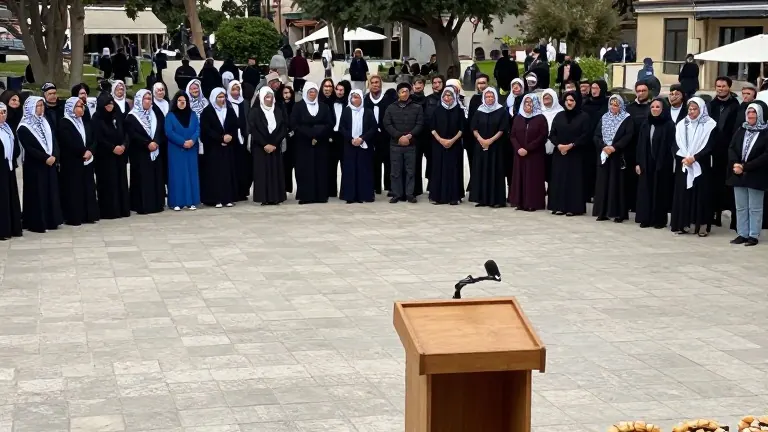
In the Palestinian-majority town of Kufr Qasim, residents gathered two days after the vote for the annual commemoration of the 1956 killings by Israeli border police. Intisar Sarsur, 65, noted that she and her relatives felt the moment was bittersweet while sharing fresh olive oil and pastry. She said the community is seeking basic human rights after a sharp rise in discrimination since the October 2023 attacks. Mansour Shaaban, 33, called the vote necessary to counter the racism he perceives in the extreme right leadership.
Netanyahu and his allies have responded with aggressive messaging. Netanyahu labeled the high Arab turnout an emergency in a video posted on election day. Far-right National Security Minister Itamar Ben Gvir urged citizens to vote to keep the country Jewish and Zionist. The Likud party later claimed Arab parties stole the election through bribery and forgery, though police found no basis for these claims and election officials confirmed the process was proper.
The opposition is split on how to proceed. Gadi Eisenkot, a former military chief of staff whose son was killed in Gaza, faces a difficult path. His center-right grouping needs Arab partners to reach a majority, but his hawkish reputation and the 'Dahiyah doctrine' he formulated in 2008 complicate the alliance. The Joint List, which won 11 of the 19 Arab seats, said it would not formally join Eisenkot’s government due to the ongoing war in Gaza and the occupation of the West Bank, though it may support him from the outside.
President Isaac Herzog is currently consulting with parties to determine who will receive the mandate to form a government. He is expected to make this announcement next week. The chosen candidate will have 28 days to build a coalition, with the option to request a two-week extension. If that fails, a second candidate gets 28 days without an extension. If no coalition is formed, Israel will hold repeat elections next year.