Democrats Win Control of Congress and Historic Senate Seats in Texas, Kansas
Election results show a major shift away from the Republican party, with Democrats taking key states they had not held in decades.
By Luana Sato ·
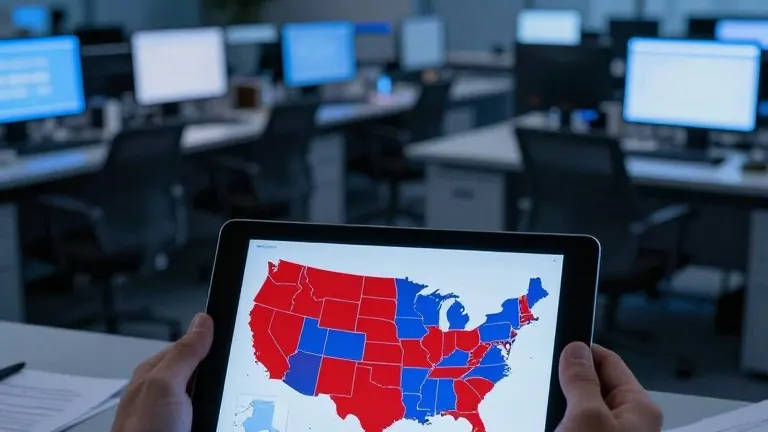
Democrats are on track to secure majorities in both chambers of the U.S. Congress following Tuesday night's election results, a shift that marks the largest gain for the party since the Watergate backlash of 1974. The outcomes extend beyond simple party victories, as Democrats won a U.S. Senate seat in Kansas for the first time since the 1930s. They also swept statewide races in Texas, a state where the party had not achieved such success for three decades.
The electoral map shifted dramatically in several states where Republicans held firm control just two years prior. Democrats broke through Republican gerrymandering efforts in Texas, Georgia, and North Carolina. In Wisconsin, the party took total control of the state legislature. The results included the defeat of the chair of the National Republican Congressional Committee and the ousting of Maine Senator Susan Collins, ending her long tenure.
Voters appeared to punish President Donald Trump's administration for breaking campaign promises. Although Trump was not on the ballot, his rallies urged supporters to treat the election as a referendum on his leadership. Public perception shifted after the administration raised tariffs instead of lowering prices and engaged in foreign conflicts that Trump had previously promised to end. Analysts noted that voters prioritized economic concerns over other issues.
Patrick De Haan, a petroleum industry analyst, stated that Tuesday saw the highest ever national average for gasoline and diesel prices on an election day. This economic pressure contributed to a widespread rebuke of the president's policies. Democrats projected to win the House and the Senate, conquering districts and states that Trump had won with ease in the 2024 election.
Senator Jon Ossoff of Georgia, who defeated Representative Mike Collins, described the night as a rejection of the current administration. "The American people have rebuked the depravity, corruption and incompetence of the failed lame-duck President Donald J. Trump," Ossoff said. He added that the results should give voters courage that a new beginning is on the horizon.
Republicans in Congress made limited efforts to distance themselves from the president during the campaign. They voted in favor of the Iran war, supported the tariff measures, and approved his nominees. The party also backed vanity projects, including the demolition of the White House East Wing and proposals to place Trump's image on Mount Rushmore or the $100 bill. This loyalty to the president's agenda contributed to the loss of congressional control.
House Speaker Mike Johnson of Louisiana attributed the Republican losses to historical midterm trends. "From the first day of this election, we knew that to keep the House and sustain our majority we would have to defy more than a century of midterm history," Johnson said. He noted that overcoming this historical pattern proved difficult, and it appeared history would hold true that night.
The election featured unusual moves by Democrats to counter Republican redistricting efforts. Incumbent Democrats in Florida and Texas survived partly due to Latino voters shifting away from Trump, reversing a trend seen in 2024. Democrats flipped Senate seats in Texas, Kansas, and South Carolina, states that had not sent Democrats to the upper chamber in decades.
Trump's direct involvement in Senate races complicated Republican defense of their majority. He pushed out incumbent Senators Thom Tillis of North Carolina and John Cornyn of Texas in favor of loyalists who proved easier for Democrats to beat. Trump backed Darline Graham in South Carolina and Mike Collins in Georgia over candidates with stronger local support. Both candidates lost, as did Ken Paxton in Texas.
Despite the results, Trump suggested on Truth Social that the outcome would have differed if he had been a candidate. "I wasn't on the Ballot and if I was, we would have won IN A LANDSLIDE!" he wrote. He concluded the post by thanking the public for their attention to the matter.