Kyiv credits US talks for fixing Starlink dropouts on fast drones
Defence Minister Khmara stated that satellite connections are stable for equipment moving over 400 km/h, ending a week of operational disruption.
By John Ferrari ·
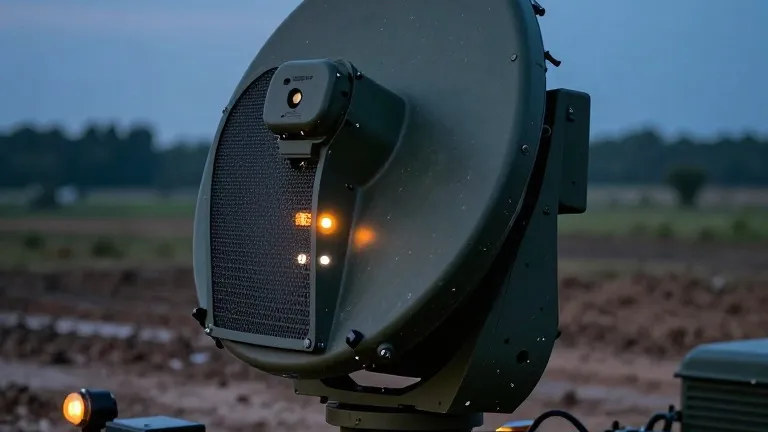
Ukraine relies on satellite internet for its drone fleet, but that link broke down for several days.
The connection is back. Defence Minister Yevhenii Khmara announced on Saturday that Starlink and Starshield services are stable for military equipment moving at speeds greater than 400 kilometres per hour. That speed is equivalent to 250 miles per hour. The restoration ends a period of disruption that lasted more than one week and interfered with drone operations against Russian forces.
Khmara attributed the fix to negotiations with Washington and the diplomatic efforts of President Volodymyr Zelenskyy. It is not yet clear who ordered the initial restrictions on access. US President Donald Trump has denied responsibility for the halt while defending Elon Musk, the head of SpaceX, which provides the service.
The incident created friction between Kyiv and Washington. Tensions were already high following Trump's agreement to temporarily lift sanctions on Russian diesel and allow US imports. Earlier this month, Trump suggested that Ukraine needed a new president. On Monday, he indicated that someone other than Zelenskyy should handle negotiations for Kyiv. These comments followed their public disagreement at the White House in February 2025.
The return of satellite service coincides with efforts to restart peace talks. Negotiators from Ukraine, Russia, and the United States are scheduled to meet in Abu Dhabi in the first half of November. This is the first major meeting more than four years after Russia began its full-scale invasion in February 2022. Kremlin spokesman Dmitry Peskov confirmed the plans on Friday, and Zelenskyy announced that technical-level meetings have been agreed upon.
Trump also claimed that his wife, Melania Trump, helped secure a local ceasefire in Oleshky in the Kherson region. Russian forces have occupied that area since 2022. Ukrainian and Russian officials later set the start of the ceasefire for October 27. A humanitarian operation is planned for October 29.
Combat continued during the disruption. A Russian missile strike on Lozova in the Kharkiv region killed one man and wounded two others on Saturday. Governor Oleh Syniehubov provided those figures. In Chernihiv, a Friday attack killed a man and wounded at least 25 people. In Donetsk, shelling in Kramatorsk killed one person and wounded six, including three children. Mayor Vadym Lyakh reported that a 62-year-old woman was killed and four others wounded in attacks on Sloviansk on Friday.
Ukraine reported strikes inside Russia on Friday and into Saturday. These included the Togliattikauchuk petrochemical plant in Togliatti, a major synthetic rubber producer. Mayor Ilya Sukhikh confirmed industrial damage but no casualties. Ukraine also targeted the Proton electronics plant in Oryol, which it says manufactures missile components. Regional Governor Andrei Klychkov reported three deaths at an unidentified facility. Authorities in Russian-occupied Crimea reported power cuts after overnight attacks. The Russian Defence Ministry said its air defences intercepted one SCALP cruise missile, four Neptune missiles, and 1,297 fixed-wing drones over 24 hours. TASS reported the figures, though they have not been independently verified.