NASA's Swift Telescope to Fall From Orbit This Friday
A failed robotic rescue left the aging observatory in a decaying orbit, with parts expected to burn up over the ocean or land in populated regions.
By John Ferrari ·
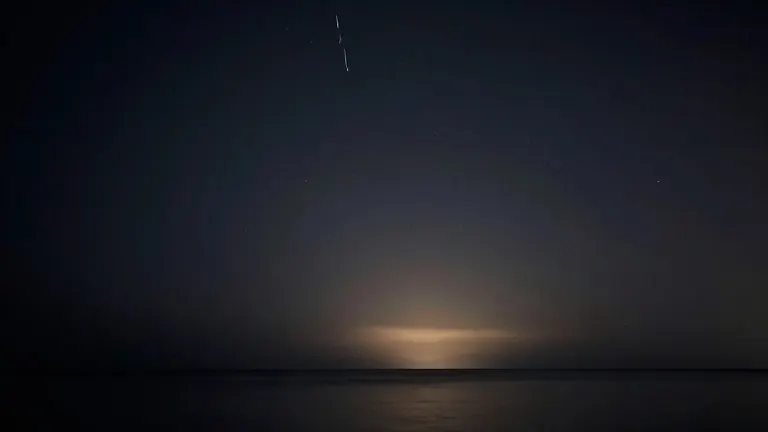
The Swift Observatory is predicted to reenter Earth's atmosphere on or around Friday, ending a 22-year mission after a robotic rescue attempt failed to save the instrument.
The U.S. Space Force tracks the telescope's rapid descent. Most of the 1.5-ton device will disintegrate during reentry. However, dense tungsten components and specific mirror sections may survive the heat. NASA mission chief Brad Cenko confirmed these denser parts could reach the ground. While the ocean remains the most likely impact zone, the reentry corridor includes landmasses in Africa, Australia, India, Southeast Asia, and the Americas.
The telescope launched on November 20, 2004, to detect gamma-ray bursts and supernovas. Its orbit has been eroding faster than planned due to intense solar activity over the last several years. In response, NASA contracted Katalyst Space last year to deploy a rescue vehicle. The company's robot, named Link, launched in July but failed to close the distance to Swift. It remained between 12 and 15 kilometers away before falling back to Earth in September.
After the rescue was aborted, Swift resumed its duties. It continued capturing high-energy events until late October. At that point, its altitude became too low for stable observations, forcing engineers to shut down its systems. John Nousek, the astronomer who led the control team at Pennsylvania State University, acknowledged the inevitable end of the mission in low-Earth orbit.
"We’ve known this day would come since before Swift was launched. At least in low-Earth orbit, what goes up must come down. And that end is catastrophic," Nousek said. The instrument served as a primary alert system for the Hubble and James Webb Space Telescopes. Its ability to swivel quickly toward new cosmic events allowed other observatories to follow up with detailed investigations.
During its operational life, Swift recorded more than 2,000 gamma-ray bursts and 1,400 exploding stars. It also tracked numerous comets, asteroids, and black holes. The loss of this rapid-response capability leaves a gap in NASA's monitoring network. Scientists are currently evaluating how to replace the specific functions Swift performed.
Nousek expressed hope in an email that the data gathered by Swift will guide future mission designs. "Our fervent hope is that the lessons learned by the successes of Swift can be applied to new generations of space missions to accelerate our discoveries about the universe," he wrote.