Night Strike on Kharkiv Hospital Leaves 62 Injured as 226 Patients Evacuated
Ballistic missiles and guided aerial bombs targeted a medical complex in the Nemyshlianskyi district, shattering over 1,000 windows and damaging surrounding residential buildings.
By Alessia Romano ·
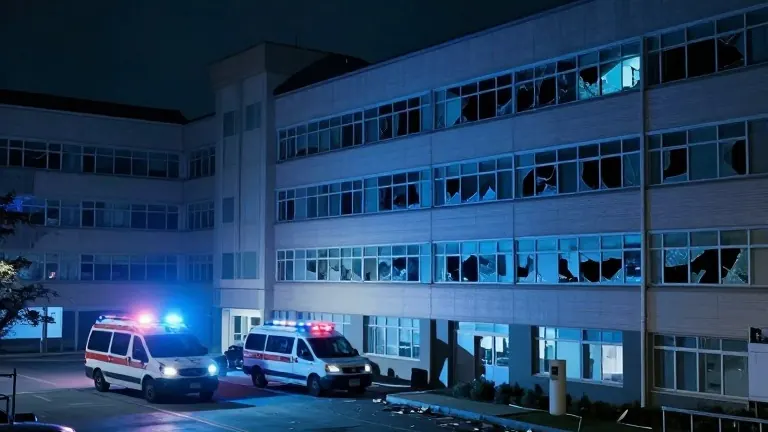
The Nemyshlianskyi district of Kharkiv experienced a concentrated aerial assault in the early hours of November 3, 2026, resulting in 62 confirmed injuries and the emergency relocation of 226 patients. The attack struck a medical complex during the night, compromising the structural integrity of the facility and forcing a large-scale evacuation to neighboring hospitals.
President Volodymyr Zelenskyy had warned earlier that evening that intelligence indicated Russia was preparing a new large-scale offensive. The subsequent strike on Kharkiv aligned with those expectations, marking a continued pattern of targeting critical civilian infrastructure during nighttime operations.
The assault began in the early morning hours with a multi-vector approach. Kharkiv Mayor Ihor Terekhov stated that the city was hit by a combination of ballistic missiles and guided aerial bombs. This type of coordinated attack caused extensive physical damage that extended well beyond the hospital grounds.
Oleh Syniehubov, head of the Kharkiv Oblast Military Administration, confirmed that the impact specifically targeted a passageway connecting different buildings within the medical complex. He reported that the initial blast damaged the structure of one of the medical departments. The force of the explosion was strong enough to compromise the stability of the complex.
The blast radius affected the surrounding residential area. Officials noted that windows in four nearby apartment blocks were shattered. Additionally, ten cars parked in the vicinity sustained damage. Terekhov later updated the damage assessment, revealing that more than 1,000 windows were broken across the hospital building and the adjacent residential structures.
Emergency services mobilized immediately after the strike to manage the aftermath. Teams worked to clear debris from the affected areas and stabilize the damaged structure. The primary focus shifted to providing medical aid to the injured and coordinating the mass transfer of patients to safer locations.
The number of injured rose in the hours following the initial reports. Syniehubov initially reported 25 people injured. As triage continued, the toll climbed to 62. He assured the public that all injured individuals were receiving medical treatment at local facilities. The increase in casualties reflected the severity of the impact on the medical infrastructure.
Logistics teams coordinated the evacuation of 226 patients to other medical facilities in the region. This move aimed to relieve pressure on the damaged hospital and ensure patients had a safe environment for recovery. Staff and equipment were transported alongside the patients to maintain continuity of care.
Local authorities continue to monitor the situation in the Nemyshlianskyi district. Cleanup and repair efforts have begun as officials work to restore normalcy. The incident highlights the vulnerability of medical facilities during nighttime aerial bombardments.