
U.S. to End $4 Billion in Annual Aid to Israel in 2027
President Trump announced the shift on Tuesday, stating that Israel will instead purchase American weapons in a barter-like arrangement.
By Alessia Romano ·
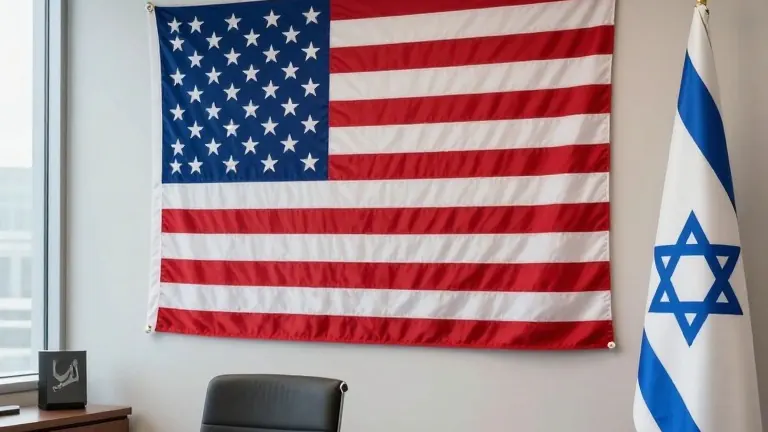
Americans will see a change in how the federal government supports its closest Middle East ally starting in 2027. The United States plans to stop providing $4 billion in annual aid to Israel, according to President Donald Trump. The White House said the country will continue to buy American arms. Trump made the announcement during a phone call to Fox News Channel on Election Day.
The president said Israeli Prime Minister Benjamin Netanyahu raised the idea first. Trump described the new setup as a form of trade. He noted that the United States currently provides a large amount of money that Israel does not strictly need. "Look, we give them $4 billion of things and money, and they don't need it," Trump said. He added that the two leaders have discussed the change for a couple of years.
Trump cited political pressure as a factor in the decision. He pointed to Michigan U.S. Senate candidate Abdul El-Sayed, a Democrat, who has criticized U.S. support for Israel. Trump said the left uses the payment as a signal of unfairness. He argued that the amount is an easy target for opponents. "It's almost too easy a target," he said. He claimed Netanyahu was understanding of the shift.
Israeli opposition leaders reacted quickly to the news. Gadi Eisenkot, a former military chief and political rival of Netanyahu, called on the prime minister to speak directly about the change. Eisenkot said it was dangerous that the defense establishment learned of the shift through the media. "The fact that Israel's defense establishment is learning of a shift in our strategic relationship through the media, at the same time as the Israeli public, shows just how dangerous Benjamin Netanyahu's conduct is," Eisenkot said in a statement.
Yair Golan, another opposition leader, warned of financial strain. He said ending military aid would deal a severe blow to Israel's security. Golan noted that the country is currently fighting wars on multiple fronts. "The burden of funding defense needs at such a critical juncture will fall entirely upon the Israeli public," Golan said in a statement. Netanyahu's office had not issued a formal comment as of Tuesday evening in Israel.
The current aid package stems from a 2016 agreement signed by President Barack Obama. That deal provided $38 billion over 10 years, or $3.8 billion annually. The original terms required Israel to spend the funds on American military industries. The current memorandum of understanding is not set to expire until 2028. Analysts say an abrupt stop in 2027 may be difficult to execute immediately.
David Schenker, a former Trump diplomat for the Middle East, said the announcement was unlikely to sway voters. He served as Trump's top diplomat in his first term and is now with the Washington Institute for Near East Policy. "It's an open question if this was about politics, but it isn't going to change Republican voters, and it certainly isn't going to change Democratic voters," Schenker said. He noted that the issue has been debated for a long time.
Congress will play a major role in the final outcome. The 2027 National Defense Authorization Act includes provisions to expand defense technology cooperation between the two nations. That bill has not yet been approved. Rep. Ro Khanna, a California Democrat, criticized the integration plans, arguing the U.S. could lose sovereignty. Critics also worry that shifting from aid to sales could affect U.S. defense contractors if Israel reduces its purchases.
Behind the scenes, officials have discussed restructuring the relationship into a defense technology partnership. A person familiar with the diplomatic discussions said there is concern on the Israeli side that the shift could result in giving up intellectual property while still facing U.S. constraints. The person spoke on the condition of anonymity because they were not authorized to comment publicly. Many previous weapons purchases are still in the pipeline, with deliveries taking years to complete.