UL Lafayette Seeks New Ties With NASA Amid Local Space Boom
University officials met with NASA leadership in Houston to discuss workforce training and research as a major spaceport project expands nearby.
By Alessia Romano ·
University of Louisiana at Lafayette President Dr. Ramesh Kolluru traveled to the Johnson Space Center in Houston last week to negotiate a deeper partnership with NASA. The visit aimed to link the university’s engineering programs with federal space missions, a move driven by the rapid growth of the aerospace sector in nearby Vermilion Parish.
The timing reflects a shift in the local economy. SpaceX has established a presence in the region, and construction is underway for what is described as the world’s largest spaceport project. UL Lafayette has moved to meet this demand by expanding its academic portfolio. In October, the university announced a new aerospace engineering concentration for mechanical engineering majors and an aerospace and autonomous systems minor in the College of Engineering.
Kolluru stated that the university has a tremendous opportunity to contribute to the future of aerospace through its students, faculty, and research. He added that conversations at the Johnson Space Center were an important step toward building a relationship that supports the workforce and innovation needs of NASA and the wider aerospace industry.
The delegation included College of Engineering Dean Dr. Ahmed Khattab. They met with Edgar Castro, the NASA chief of the Propulsion and Power Division. The group discussed student internships, faculty engagement, and collaborative research. They also reviewed curriculum development based on current industry needs.
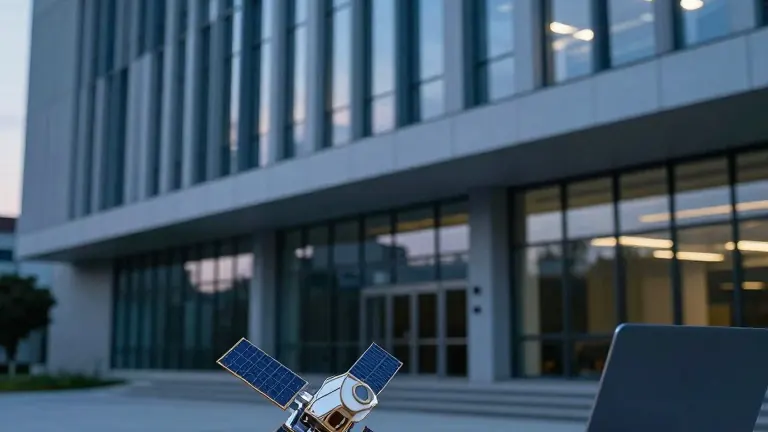
The university already has a history in space exploration. In 2007, students in the CAPE program launched a student-built satellite, the first of its kind. Currently, the team is developing a fourth miniature satellite. This work is supported by the Nick Pugh Aerospace Electronics Research Laboratory, which focuses on autonomous systems, satellite technologies, and aerospace electronics.
Graduates from the program have held high-level roles at NASA. Jay Honeycutt worked on the Apollo program and later directed the John F. Kennedy Space Center. Stephen Damico, a mechanical engineering graduate, recently spoke on campus about his role in launching Artemis II.
Dr. Khattab said the university is intentionally aligning its academic offerings with the changing needs of the engineering workforce. The new aerospace engineering program begins in fall 2027. He noted that relationships with organizations such as NASA will help prepare students with the knowledge, skills, and experiences they need to succeed.