Texas Democrats Take Control as State Economy Remains Divided
Republican officials warned of economic collapse, but experts argue structural factors like low regulation and natural resources will persist.
By Alessia Romano ·
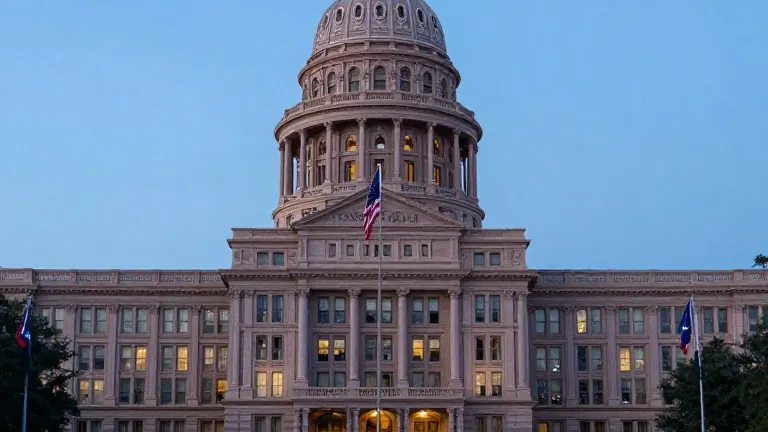
Texas Democrats secured control of the state government Tuesday, ending decades of single-party dominance and triggering immediate debate over the future of the state's economy. Outgoing Lieutenant Governor Dan Patrick conceded that Democratic policies would fail, comparing them to global socialist experiments. Texas Tech University regent and donor Cody Campbell warned the result would gut the Texas economic miracle. Despite these warnings, political scientists and economists say the state's fundamental economic drivers are unlikely to shift quickly.
The Texas economy has grown faster than any other major state over the past 25 years. Jake Bradt, an assistant professor at the University of Texas at Austin, attributes this growth to Texas' large population, diverse industries, and geographic location along the Gulf of Mexico. He noted that the state's low regulation environment and constitutional ban on a state income tax remain stable features. Bradt said the change in leadership represents a shift in who enforces existing rules rather than a rewrite of the rules themselves. He added that major statutory changes will be difficult to pass in a divided government where Republicans retain control of the Senate.
Governor-elect Beto O'Rourke, referred to in the text as Hinojosa, must navigate a new political landscape. He promised a postpartisan administration but faces a Senate that intends to check Democratic power. State Senator Bryan Hughes, a Republican from Mineola, stated that radical bills would not pass. The most immediate shift may occur in the office of the Attorney General. Attorney General-elect Nathan Johnson said he will target price gouging and consumer scams. He also announced he will end the lawsuit against Tylenol filed by his predecessor, Ken Paxton, which Paxton used to advance Republican priorities.
Business leaders are monitoring the transition closely. Elon Musk, who invested nearly $190 million in a Senate race this year, suggested on X that data centers might move to space, hinting at a change in the state's appeal. Governor-elect Hinojosa committed to a moratorium on new data center approvals until the Legislature passes regulations. The Data Center Coalition and the Texas Association of Business both pledged cooperation with the new leadership. Kelly Keel, CEO of the Texas Association of Business, said the coming legislative session offers a chance to build on the state's business-friendly legacy.
Energy policy also faces scrutiny. Jon Rosenthal, a Democrat, won a seat on the Texas Railroad Commission for the first time since 1990. The Texas Oil and Gas Association said it intends to be a constructive partner in the legislative process. Meanwhile, Governor-elect Talarico, who appears to be the same figure as Hinojosa in this context or a separate elected official mentioned, committed to an all-of-the-above energy strategy. He told CBS that he wants Texas to be an energy leader in the 21st century. Leonard Aguilar, president of the Texas AFL-CIO, argued that the election results signal a need to redefine the Texas Miracle for working people who face rising costs and education challenges.
The state enters the new administration with a balanced budget and a healthy rainy day fund. Sriram Villupuram, a finance professor at the University of Texas at Arlington, said Democrats will keep the economy generating revenue while directing those funds toward their own spending priorities. The new leadership must now translate these political victories into policy while managing the expectations of a business community that has grown accustomed to the previous political stability.