Democrats Seize Both Chambers of Congress in Historic Midterm Wave
Democrats have seized control of both the House and Senate, ending Republican dominance in Congress and flipping five governorships in a historic midterm wave.
By Alessia Romano ·
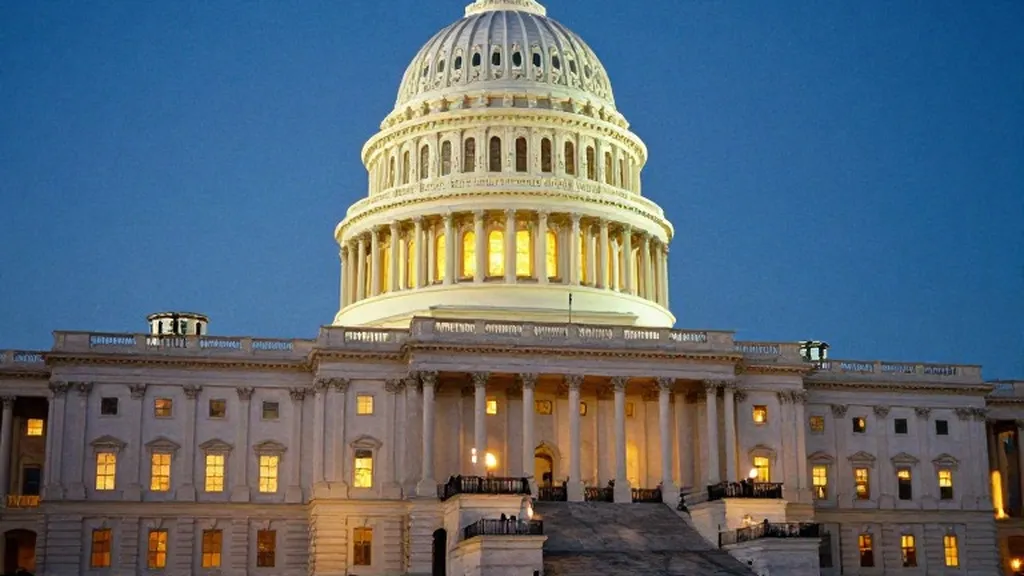
Voters across the United States delivered a decisive blow to President Donald Trump's Republican Party on Tuesday, handing Democrats control of both chambers of Congress in a midterm election that served as a harsh referendum on the administration's first two years. The results, finalized as of 4 p.m. Eastern Time on November 6, show Democrats securing a 250 to 157 majority in the House of Representatives and a 54 to 44 majority in the Senate. This shift marks the first time Democrats have held a majority of governorships since before the 2010 elections, signaling a broad national realignment that has reshaped the political landscape for the next two years.
The sweep of Democratic victories was particularly striking in the Senate, where the party gained seven seats that were previously held by Republicans. This net loss placed the 2026 election in the top 20 percent of historical midterm cycles in terms of seat swings against a sitting president's party, a threshold often defined as a wave election. Republicans had entered the election with a 53 to 47 majority, relying on a map widely considered favorable to their party. However, the loss of seven seats, including in deep red states, forced them into a minority position that will significantly limit their legislative power in Washington.
In the House of Representatives, Democrats picked up at least 43 seats from Republicans, a gain that far exceeds the net three districts they needed to secure a majority. The final tally shows 250 seats for Democrats and 157 for Republicans, with 28 races remaining uncalled as of the latest reports. This dominance in the lower chamber means that Democratic leaders, including new chairmen for key committees, will have the primary authority to set the legislative agenda, draft bills, and control committee hearings for the remainder of Trump's second term.
Beyond the federal level, the election resulted in significant changes at the state level, with Democrats winning 22 of the 36 governorships on the ballot. This outcome flipped five governorships from Republican to Democratic control, a shift that did not occur in any state during the 2024 cycle. The broader state government landscape also shifted, as Democrats secured 46 of the 88 state legislative chambers contested. This trifecta of power, where one party controls the governorship and both legislative houses, now exists in 20 states, compared to 14 prior to the election, giving Democrats greater influence over state budgets and policy implementation.
The electoral shift was driven by a mix of economic frustration and dissatisfaction with the administration's foreign policy. A pre-election poll indicated that three-quarters of voters described the economy as poor or not so good, with eight in ten citing inflation as a source of financial hardship. The war in Iran also emerged as a critical issue, with Defense Secretary Pete Hegseth vowing to fight impeachment efforts in Congress after voters punished Republicans for the conflict. These factors combined to create a electorate that was deeply unhappy with the country's direction, leading to high turnout and a decisive mandate for change.
In response to the losses, the White House has already begun a period of major internal transition. President Trump announced on Friday that he is replacing longtime adviser Susie Wiles with Stephen Miller, the architect of the administration's hard-line immigration policies, to serve as the next chief of staff. Miller is known for his unapologetic style and is seen as a more determined figure within Trump's inner circle. This personnel shake-up comes as the administration struggles to adjust to its reduced power in Congress and faces a new congressional leadership that is committed to imposing stricter checks on executive authority.
Democratic leaders are already positioning themselves for a robust legislative agenda, with key figures emphasizing their intent to reverse policies they view as detrimental to the American public. Representative Richard Neal, who is expected to lead the House Ways and Means Committee, stated his commitment to reversing what he called unjustified tariffs and backroom deals on trade. Meanwhile, Senator Elizabeth Warren of Massachusetts is expected to wield increased power over Wall Street regulations, reflecting the party's desire to address economic inequality and corporate oversight in the new political environment.
The election also brought a historic slate of women and candidates of color to office, reshaping the face of political leadership in the United States. In Mississippi, Democrat Scott Colom is on the cusp of becoming the first Black senator from the state since the post-Civil War Reconstruction era, though the final count of outstanding ballots is still being processed. In Los Angeles, Nithya Raman defeated incumbent Karen Bass in a closely fought mayoral race, further highlighting the diversity of the new Democratic leadership that will take office in January 2027.
Despite the clear victory, the Democratic Party is not without internal disagreements as they turn their attention to the 2028 presidential race. The party is expected to face a crowded and unpredictable primary, with debates over how to win back the White House after this midterm win. The new congressional majority will have to balance its immediate legislative goals with the long-term strategy of maintaining the momentum generated by this historic electoral shift, all while navigating the challenges of governing under a president who has vowed to fight for his agenda despite the losses.
The immediate impact of these results will be felt in the budget process, where the Democratic-controlled Congress will have the ability to block or modify the president's spending proposals. The new leadership in both chambers has indicated a willingness to use their legislative tools to check executive power, particularly on issues such as immigration, trade, and foreign policy. As the new terms begin on January 3, 2027, the political dynamics in Washington will be fundamentally different, with Democrats holding the keys to the legislative process and Republicans forced into a defensive role.