Federal Regulators Set the Stage for Cyan-Lit Autonomous Fleets
New proposed rules would standardize blue-green indicator lights for driverless vehicles, aiming to clarify their status to surrounding traffic while simplifying outdated safety mandates.
By Alessia Romano ·
For years, the automotive industry has debated the best way to visually distinguish a driverless vehicle from a traditional car, with suggestions ranging from flashing text to distinct audio alerts. Now, federal regulators have intervened with a specific proposal that aims to settle the matter with a single, distinct color.
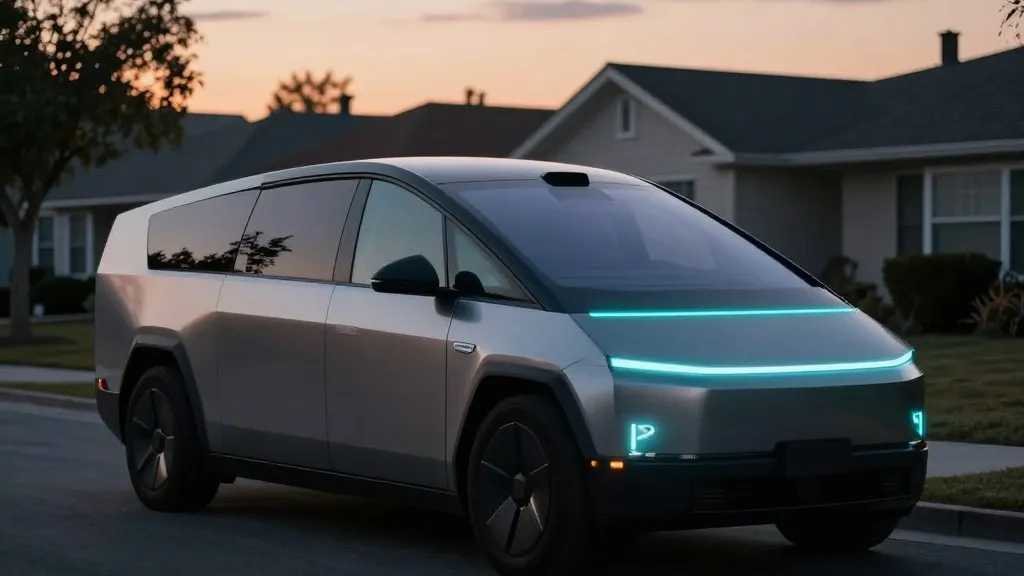
The National Highway Traffic Safety Administration has released proposed amendments to Federal Motor Vehicle Safety Standard No. 108, specifically targeting the needs of autonomous vehicles. The core of this proposal involves the adoption of cyan-colored marker lamps. These lights are intended to provide a clear and consistent signal to law enforcement and other road users that the vehicle’s automated driving system is currently in control. The agency selected cyan because the visual spectrum is already crowded; red, amber, white, and flashing blue or red lights are already assigned to functions such as braking, turn signals, headlights, and emergency vehicles. By introducing a blue-green hue, NHTSA believes it can fill a remaining gap in the visual language of the road without causing confusion.
This approach builds on existing precedents, such as the state-level approval granted to Mercedes-Benz for turquoise lights on its Level 3 Drive Pilot vehicles, although the automaker has since shifted focus. The goal is to establish a national standard that allows operators like Waymo, Nuro, and Zoox, as well as manufacturers like GM and Mercedes, to adopt a uniform communication method. While the use of these lights would remain optional for manufacturers, the proposal mandates specific standards for their color, brightness, and placement. This ensures that if a company chooses to install them, the setup is consistent and legally defined rather than a haphazard mix of signals.
Beyond the new lighting, the proposal seeks to remove requirements that no longer make sense for vehicles without human drivers. Current rules mandate physical controls such as hazard switches, manual beam shifters, and turn levers. NHTSA proposes to eliminate these obligations and update the 12.8-volt testing standard to accommodate modern LED architectures. The agency is also considering removing rules that dictate the relative positioning of high-beam and low-beam lights.
These changes are part of a broader Department of Transportation effort to streamline the deployment of autonomous vehicles by allowing automakers to design cars without traditional human-operated controls. However, the regulatory environment remains a mix of modernization and strict enforcement. Last month, NHTSA opened an audit query into the Tesla Cybercab to examine the technical data used for its certification, specifically regarding the absence of sideview mirrors, pedals, and a steering wheel, which are currently required under the existing standard.
If finalized, these rules will set the visual and structural framework for the next generation of robotaxis, providing a uniform way for the public to identify automated vehicles while giving manufacturers more flexibility in their designs.