Robots to Take Over Factory Work: Tesla's New Line Targets 20,000 Weekly Units
Tesla is ramping up production of its humanoid robot to meet an aggressive weekly output schedule for dangerous and repetitive jobs.
By Alessia Romano ·
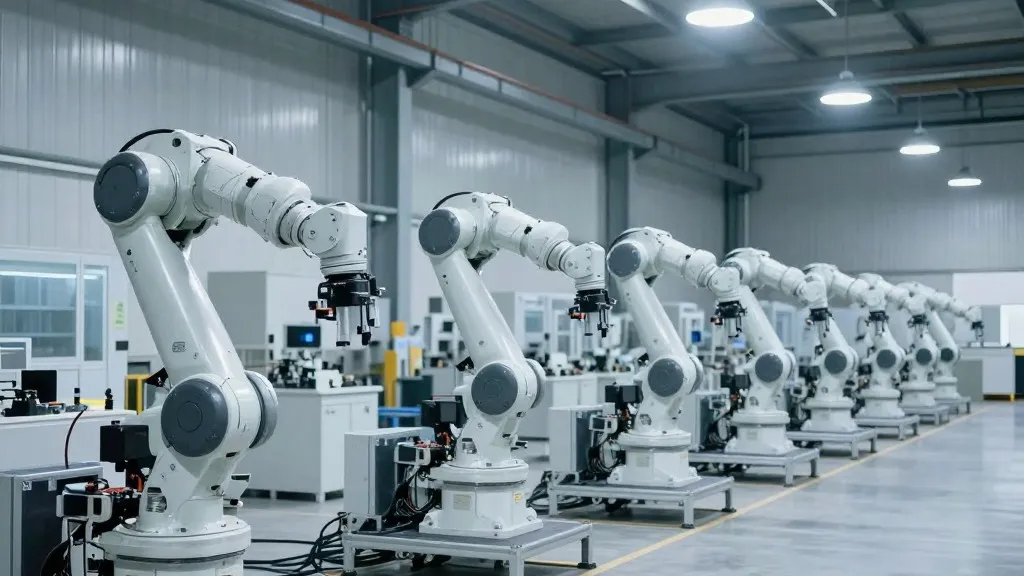
A new factory line inside Tesla's Fremont facility is now producing humanoid robots intended for work in dangerous, repetitive, and continuous roles. This setup represents a significant shift in how artificial intelligence is developed for physical labor, as it relies on robots instructing themselves rather than relying on data from human drivers. According to the company's third-quarter shareholder letter, the units rolling off this new line are the first manufactured to production-quality standards, and the process used to build them has been proven suitable for a commercial product.
The facility in question occupies the space that previously assembled the Model S and Model X. To prepare for the new hardware, the company cleared the old vehicle line in just 46 days. This rapid conversion was undertaken to create space for a production capacity targeted at one million units annually. While the line is currently ramping up, the long-term goal for the facility is to reach an output of approximately 20,000 robots per week.
The company describes the ramp-up as following an S-curve pattern, where initial growth is slow before accelerating sharply. Currently, the focus is on refining the artificial intelligence, electromechanical design, reliability, and service life of the units. This work is expected to be finished by the end of next year, at which point the company plans to begin delivering the robots to outside companies for hazardous or repetitive tasks.
A major challenge facing the development of these robots is a lack of historical data compared to the company's fleet of vehicles. While cars send driving data from millions of active units back to the AI team, no such network exists for the humanoid robots. To solve this, the company is launching an Optimus Academy where 10,000 to 20,000 robots will practice a wide range of tasks and feed what they learn into the next version of the model.
Future units are also slated to receive hardware upgrades, specifically the AI5 chip, which is scheduled for installation next year. Additionally, a new video is expected to be released within one or two months demonstrating the robot completing tasks driven by AI rather than preprogrammed motions. This contrasts with rival humanoid demos that only run scripted routines, which would not hold up in the real world.
The supply chain is lining up behind the program to support this expansion. In September, three specific companies were certified as mass production partners for components. Furthermore, a far larger factory for the robot is rising at Giga Texas, where drone footage shows the steel frame nearing completion, and the company has set a long-term target for that plant at 10 million robots a year.
Cost control is also a priority, with production costs trending toward the expected manufacturing cost of the Cybercab. This is intended to signal that the robot is being engineered for volume from the start. However, the hands remain the toughest piece of the design, and that is where much of the current engineering effort is focused.