Tesla's Humanoid Robot Launch Slips to Late 2027 as Hand Mechanics Prove Stubborn
The automaker delayed external Optimus deliveries due to persistent hardware and AI challenges, a setback that rivals like XPeng and Boston Dynamics are already navigating.
By John Ferrari ·
The race to build practical humanoid robots has entered a critical phase of reality checks for major industry players. Tesla recently confirmed that it will begin shipping its Optimus robots to outside clients around the end of 2027. This update comes from Elon Musk during the company's third quarter earnings call, where he identified the robot's hands, overall durability, and artificial intelligence as the primary hurdles remaining before full deployment.
Musk noted that Tesla has initiated early production of Optimus on its high-volume Fremont line, which previously assembled Model S and Model X vehicles. While much of the infrastructure for a massive annual output is already in place, the company expects to take at least a year to reach the target rate of roughly 20,000 units per week. Design elements are still evolving, preventing an immediate ramp-up to full capacity. The initial external customers will likely be industrial firms seeking to automate dangerous, repetitive, or round-the-clock tasks.
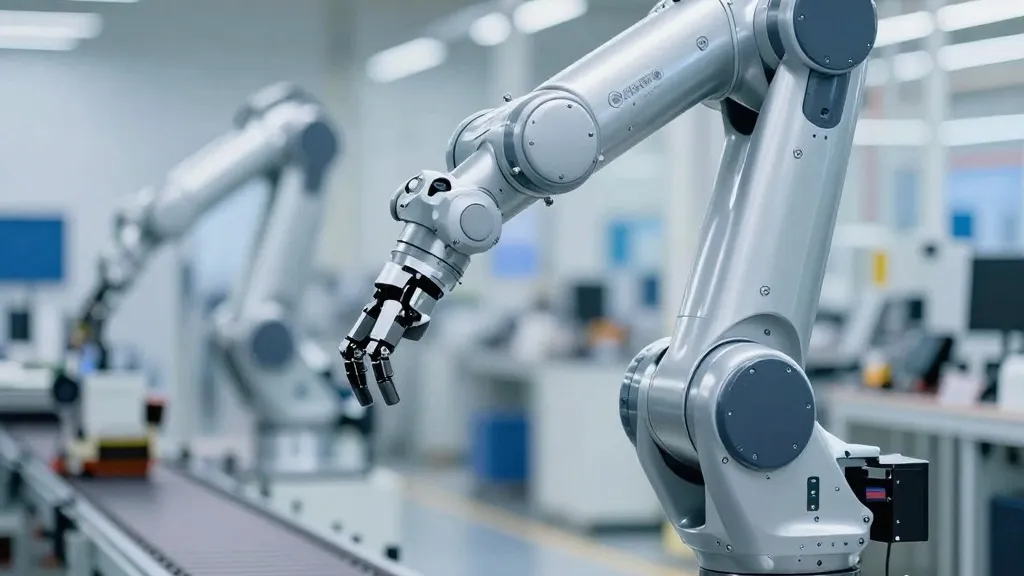
The mechanical hand remains the most significant engineering challenge. A Tesla engineer explained that the fingers must be soft enough for delicate manipulation yet tough enough to withstand constant wear without the ability to heal like human skin. Custom gears also present reliability concerns. On the software side, the lack of a large fleet of robots collecting real-world data is a bottleneck. To address this, Tesla plans to build 10,000 to 20,000 units for an internal training program called Optimus Academy. The company also aims to integrate its AI5 chip into the robots by April 2027.
Musk expressed confidence that Tesla is far ahead of the competition, stating that no other company is even close to achieving a general-purpose humanoid. However, competitors are making steady progress. XPeng activated an automated production line for its IRON robot in Guangzhou in September, with over 80% of core processes automated. The company targets mass production by the end of 2026 and initial deliveries in the first half of 2027. Meanwhile, Boston Dynamics began producing its electric Atlas in January and has already secured all 2026 deployments, including work with Google DeepMind. Hyundai has also opened a training center in Georgia to teach Atlas to sequence car parts.
The timeline for Optimus has shifted multiple times in recent years. Musk previously suggested that high-volume production for external clients could happen in 2026, but that target has now moved to late 2027. In January 2025, he projected the build of about 10,000 robots that year, yet admitted that none were performing useful work by year's end. The company's shareholder letter now describes the current Fremont output as the first production-quality bots, implying that earlier units were not ready for the market.
Competitors are taking different approaches to the hand problem. Boston Dynamics has prioritized sturdy grippers for industrial parts over human-like dexterity, a pragmatic solution that bypasses some of Tesla's current struggles. While Tesla may build the most robots, the true test is making them useful in unscripted environments. Musk promised a video within a few months showing Optimus performing non-programmed tasks, a demonstration that will be closely watched by skeptics who have seen previous timelines slip.
As the industry advances, the focus is shifting from impressive demos to reliable, generalized work. Tesla's promise of a near-future video will be a key indicator of progress. If the robot can handle real-world variability without pre-programmed routines, it will validate the new timeline. Until then, the gap between building a robot and making it a productive worker remains the central challenge for every major player in the field.