Tesla Restricts Unsupervised Driving to Specific Robotaxi Zones by 2027
Owners will not gain full autonomous control over their vehicles, but instead integrate them into a limited fleet operating in select urban areas.
By Luana Sato ·
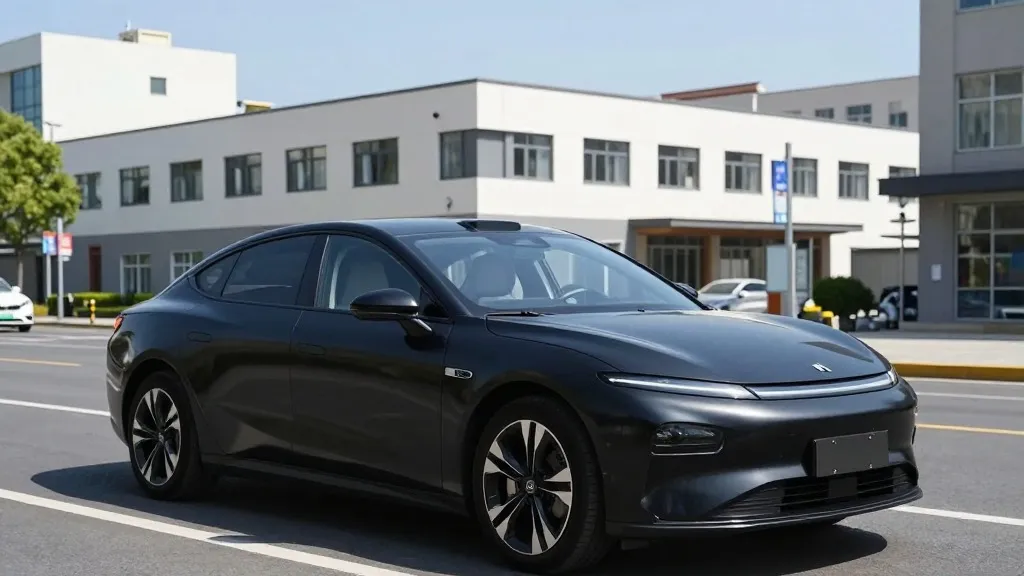
For Tesla owners who purchased Full Self-Driving capabilities, the practical implications of the company's latest announcement are significant. The ability to use the vehicle without supervision will not be a universal feature available in any location. Instead, the system will only function within specific geographic boundaries where Tesla already operates its Robotaxi service. This means that for most drivers, the car will continue to require human oversight on the majority of their daily routes, including highways and areas outside of designated city districts.
The timeline for this limited rollout was confirmed during Tesla's third quarter 2026 earnings call. Ashok Elluswamy, the company's chief AI officer, stated that unsupervised Full Self-Driving for customer-owned cars is targeted for the second quarter of 2027. This date represents the latest iteration of a promise that Elon Musk has reiterated for nearly a decade. However, the scope of the feature has narrowed considerably since earlier projections suggested a broader, software-based update that would allow vehicles to drive themselves anywhere.
The path to this current status involves a series of shifting expectations. In July 2025, Musk told investors that unsupervised personal use would be available in certain geographies by the end of that year. A year prior, he expressed confidence that the technology would be ready within twelve months. Despite these repeated assurances, the product definition has changed. It is no longer about a car that drives its owner to any destination. It is about the owner's vehicle joining Tesla's managed Robotaxi fleet.
Under this new framework, an owner's car will operate unsupervised only where Tesla's Robotaxi network is active. Currently, this service is live in six U.S. metropolitan areas. These zones are relatively small, often covering only specific districts. For example, the service area in Miami includes West Miami and a corridor toward Doral and Sweetwater. Similar limited geofences were established for Orlando and Tampa in July 2026. Within these areas, the vehicles generally avoid highways and stick to low-speed routes.
The operational scale remains modest. Tesla reported that its Robotaxi fleet reached nearly two million cumulative unsupervised miles by the end of the third quarter. This milestone was achieved one month after the Cybercab model was added to the Austin fleet. Third-party tracking data from earlier in the year indicated that only dozens of fully driverless Teslas were on the road, a far cry from the hundreds of thousands Musk had previously envisioned. Competitor Waymo, which entered Orlando and Tampa before Tesla, has already logged over three million miles.
The distinction between the original sales pitch and the current product is stark. For years, the marketing message suggested that a software update would eventually allow the car to drive itself anywhere. Now, the target is specific: the car joins Tesla's fleet, operates in Tesla's zones, and follows Tesla's terms. Owners with hardware version 3 computers have already been informed that their vehicles cannot run unsupervised Full Self-Driving at all, with no clear upgrade plan provided.
Regulatory hurdles continue to complicate the rollout, particularly in California. Tesla has not released data to the California DMV because it does not want to be classified beyond a level 2 autonomous system. As a result, a safety driver is still required in every car in the Bay Area. Elluswamy reiterated that safety remains the primary bottleneck, which is why the company limits operations to lower-speed environments. He estimated that these safety issues would be resolved by next year, though he acknowledged uncertainty regarding the exact timing.
The announcement highlights a shift in strategy from a consumer-facing autonomous feature to a fleet-management integration. For buyers, this means that the value of unsupervised driving is tied to where they live and work. If a driver does not reside or commute within a designated Robotaxi zone, the unsupervised feature will have minimal impact on their daily experience. The company's focus appears to be on proving the technology in controlled environments before expanding to the broader public.
As Tesla moves toward the second quarter of 2027, the expectation for the general public must be adjusted. The goalpost has moved from a car that drives you anywhere while you sleep to a car that can work as a Robotaxi inside a small, controlled geofence. This change affects how owners should view their purchase, particularly those who bought the feature expecting a near-future capability for long-distance travel or highway commuting.
The next steps for Tesla involve continuing to refine safety in these limited zones and potentially expanding the geographic coverage of its Robotaxi service. Shareholders and consumers will be watching to see if the Q2 2027 target holds. Until then, the unsupervised capability remains a niche feature, accessible only to a small subset of owners in specific cities, rather than a universal standard for the vehicle fleet.