A Practical Guide to Voting: Poll Hours, ID Rules, and Mail Ballot Deadlines
Voters across the nation navigate varying state rules, Postal Service deadlines, and ID requirements to cast ballots in the 2026 midterms.
By Luana Sato ·
Election Day has arrived, and millions of Americans are preparing to cast their ballots in the 2026 midterm elections. This election serves as a referendum on President Donald Trump's second term, with voters citing high prices and an unpopular war with Iran as key concerns. With all 435 U.S. House seats and 35 U.S. Senate seats up for grabs, the outcome will determine which party controls Congress for the final two years of the current administration. Before heading to the polls, it is essential to understand the specific logistics of voting, including hours, identification, and mail-in procedures, which vary significantly by state.
The first step for any voter is to confirm their polling place and the specific hours of operation. Ballotpedia provides a comprehensive list of poll hours for all fifty states, noting that all times are local. In many states, such as Alabama, Arizona, and Georgia, polls open at 7:00 a.m. And close at 7:00 p.m. However, other states have different schedules; for example, polls in Connecticut, Delaware, and Louisiana remain open until 8:00 p.m. New York extends voting until 9:00 p.m., while Kentucky and Missouri close their polls at 6:00 p.m. Voters should check vote.gov or their local state election office to verify their specific polling location and hours, as some states like New Hampshire and Vermont have town or county-specific variations in opening and closing times.
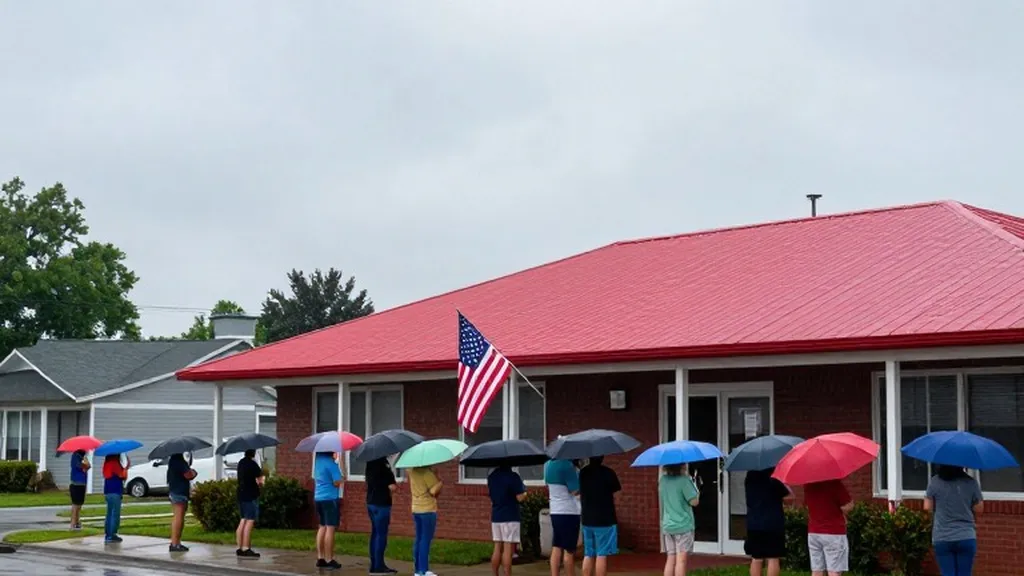
A critical rule for voters who are waiting in line is that anyone in line when polls close is entitled to vote. This provision ensures that early arrivals are not disenfranchised by the closing time. However, voters must be prepared to meet identification requirements, which vary by state. According to USA.gov and state election officials, some states require a photo ID, while others accept non-photo forms of identification such as utility bills or bank statements. It is advisable for voters to check their state's specific ID rules before leaving for the polls to avoid delays or the need to return home for documentation.
For those who have already received a mail-in ballot, the U.S. Postal Service has implemented special measures to ensure timely delivery and counting. The Postal Service has added extra hours, staff, and special lines to process mail ballots. In states that rely heavily on mail voting, such as California, Colorado, Hawaii, Nevada, Oregon, Utah, Vermont, and Washington, the deadline for ballots to be postmarked or received is crucial. Voters in these states should ensure their ballots are mailed well in advance or delivered to a designated drop box by the state's deadline to guarantee their vote is counted.
The 2026 election features a highly competitive landscape in both the House and Senate. Ballotpedia identifies 46 battleground districts in the House, where the outcome could swing control of the chamber. In the Senate, 13 races are considered competitive, including key matchups in states like Georgia, Michigan, and Ohio. In Georgia, Democratic Senator Jon Ossoff faces Republican Representative Mike Collins, while in Michigan, former Representative Mike Rogers challenges Abdul El-Sayed. In Ohio, former Senator Sherrod Brown runs against incumbent Senator Jon Husted. These races are closely watched because a shift of just a few seats could change the balance of power in Washington.
Governor races are also pivotal, with 36 governorships up for election. Republicans currently hold 26 governorships, while Democrats hold 24. In states like Arizona, Kansas, Michigan, Pennsylvania, and Wisconsin, Democrats are defending governorships in states that Trump won in 2024. Conversely, Republicans are defending governorships in New Hampshire and Vermont, states that voted for Kamala Harris in the previous election. The Associated Press notes that the outcome of these races could determine which party holds a nationwide majority of governorships, a position Republicans have held since 2010.
Voters are also grappling with the financial implications of the election, as the 2026 cycle is likely to be the most expensive in history. Republican committees have outraised and outspent Democratic committees, aided by Trump-affiliated groups and Elon Musk. However, at the candidate level, Democrats have outraised their opponents. This financial disparity has led to intense advertising campaigns, with 88.1% of Republican general election TV ad spending focused on states and districts Trump won in 2024. The high cost of living and economic anxiety remain central themes, with 75% of U.S. Adults disapproving of the direction of the country.
As voters head to the polls, they are aware of the legal battles surrounding the election. A federal judge temporarily barred the Trump administration from carrying out a plan to prevent noncitizen voting, a move critics said could disenfranchise eligible voters. Additionally, a judge ordered the administration to stop demanding that California election officials segregate ballots cast by people on lists of suspected noncitizens. These legal developments have added a layer of complexity to the voting process, prompting voters to stay informed about any last-minute changes in their state's election administration.
The mood among voters is mixed, with Republicans bracing to lose the House while fighting to hold the Senate. Democrats, on the other hand, are described as cautiously optimistic. President Trump held dozens of rallies in the lead-up to Election Day, ending his schedule in Salina, Kansas, where he urged voters to pretend he was on the ballot. Despite the partisan rhetoric, many voters are focused on practical issues such as healthcare costs and taxes. As polls open, the nation awaits the results that will shape the second half of President Trump's term and the future of American governance.