New Maps in Seven States May Defy Predictions on Election Day
Redrawn districts in key swing states face tests of voter loyalty as midterms approach.
By John Ferrari ·
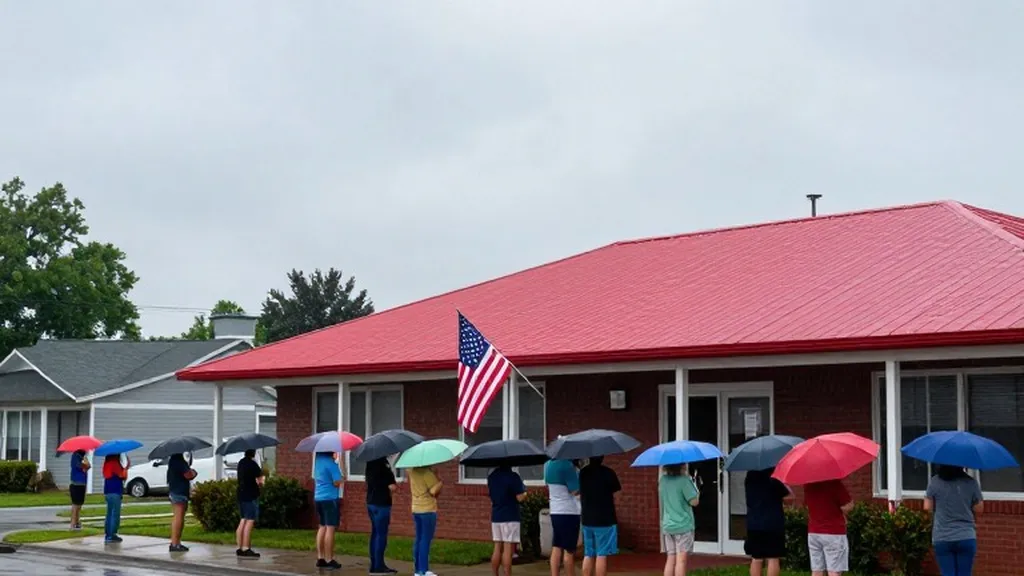
On this Election Day, voters in seven states are casting ballots under congressional maps that have been redrawn since the last midterms. California, Florida, Missouri, North Carolina, Tennessee, Texas, and Ohio are all using new district lines. These changes were intended to solidify party control in certain areas, yet political analysts and party leaders are watching closely to see if the new boundaries will produce the expected results. The outcome of these specific races could determine which party holds the balance of power in the House of Representatives.
The United States House of Representatives has all 435 seats up for election today. Republicans currently hold 218 seats, while Democrats hold 214. There is one independent member and several vacancies. For Democrats to claim a majority, they need to net a gain of three districts. Republicans can afford to lose no more than two seats to maintain control. Ballotpedia has identified 46 battleground districts in this cycle. Of these, 25 are currently held by Democrats and 21 are held by Republicans. The complexity of the race is heightened by the fact that 60 incumbents are not running for reelection, with 37 Republicans and 23 Democrats sitting out this cycle.
A significant portion of the competition is taking place in districts that voted for the opposing party’s presidential candidate in 2024. Twenty-one districts currently held by Democrats voted for President Donald Trump in the previous election. Conversely, nine districts held by Republicans voted for Vice President Kamala Harris. This divergence suggests that local voters in these new maps may not align strictly with the partisan leanings suggested by the redistricting process. The new lines in states like North Carolina and Texas have been particularly scrutinized for this potential mismatch.
In the Senate, 35 seats are on the ballot, including 33 regular elections and two special elections. Republicans hold 53 seats, and Democrats hold 45, with two independents who caucus with the Democrats. Democrats need a net gain of four seats to take control of the chamber. Republicans can lose only two seats to keep the majority. Eleven senators are retiring or not running again, including four Democrats and seven Republicans. The results in these chambers will determine who controls oversight and investigations for the final two years of the current administration.
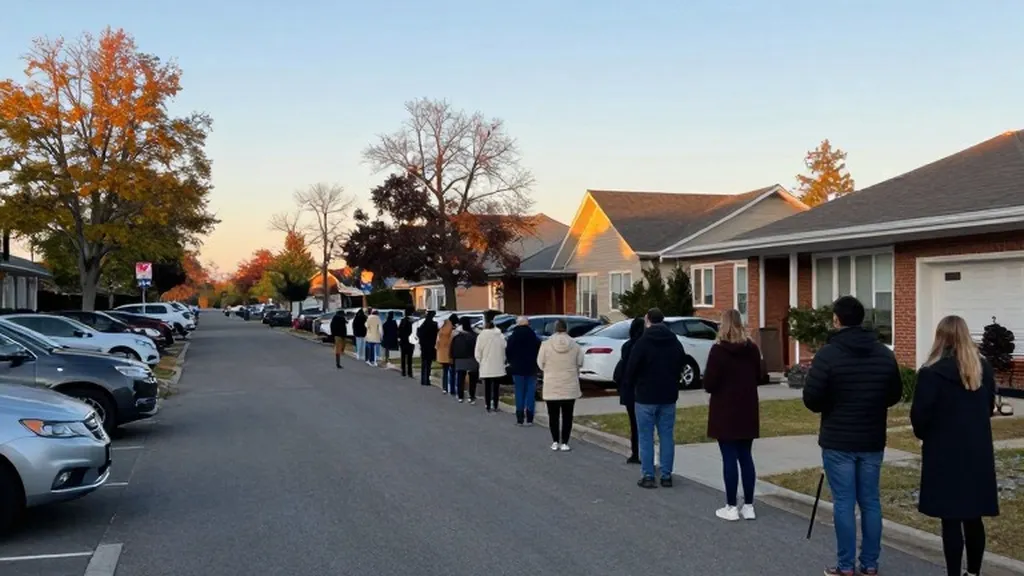
The mood among voters is shaped by economic concerns and the state of the nation. The Associated Press describes this election as a referendum on the current administration, noting that voters are struggling with high prices. A recent poll by the AP and NORC found that 35 percent of U.S. adults approve of the president’s job performance, while 25 percent approve of his handling of the economy. Approximately seven in 10 adults say the country is heading in the wrong direction. These sentiments are driving high turnout, with more than 57 million people having already voted as of Monday, surpassing early vote totals from four years ago in many states.
Party leaders are preparing for a tight race. Republican National Committee Chairman Joe Gruters stated that everything depends on turnout, asserting that if they turn out their voters, they will win. Democratic Congressional Campaign Committee Chair Suzan DelBene countered that the American people are angry and want change. The race for the House is particularly close, with one or two seats potentially tipping the balance. Democrats are cautiously optimistic, while Republicans are bracing for potential losses in the House but fighting hard to hold the Senate.
The new congressional maps are central to the strategic calculations of both parties. Republicans attempted to beat the typical midterm pattern, where a president’s party almost always loses seats, by using redistricting. However, the new districts in Florida and other states may not vote as drawn. This uncertainty adds a layer of complexity to the election. Voters in these newly drawn districts are effectively deciding whether the new lines reflect their political preferences or if the old voting habits will prevail.
In the governor races, 36 offices are up for election. Republicans currently hold 26 governorships, and Democrats hold 24. In the states with elections today, each party holds 18 of the offices on the ballot. Nineteen of these races do not feature an incumbent, as many governors are term-limited or have chosen not to run. Democrats would need a net gain of two governorships to achieve a nationwide majority, a feat they have not accomplished since 2010. The outcome of these races will influence the broader political landscape and the future of state-level governance.
Voters are also weighing in on the issues that have dominated the news cycle, including the cost of living and foreign policy. The Associated Press noted that voters are angry over an unpopular war with Iran and the rising cost of goods. These issues are likely to influence how voters in the new congressional districts cast their ballots. The combination of local economic pressures and national political dynamics creates a challenging environment for candidates in all seven states with new maps.
As polls open across the country, the focus remains on the 46 battleground districts in the House. The results in these districts will be closely watched to determine if the new redistricting efforts have achieved their goals. If the new maps in states like Ohio and North Carolina do not align with the expected partisan shifts, it could have significant implications for the composition of Congress. The coming hours will reveal whether the new lines have successfully redrawn the political map or if voters have maintained their previous allegiances.