From state lines: The 35 Senate and 36 governor races deciding 2026
Voters in key states face pivotal choices in every Senate and governor contest, with margins that could shift national power.
By John Ferrari ·
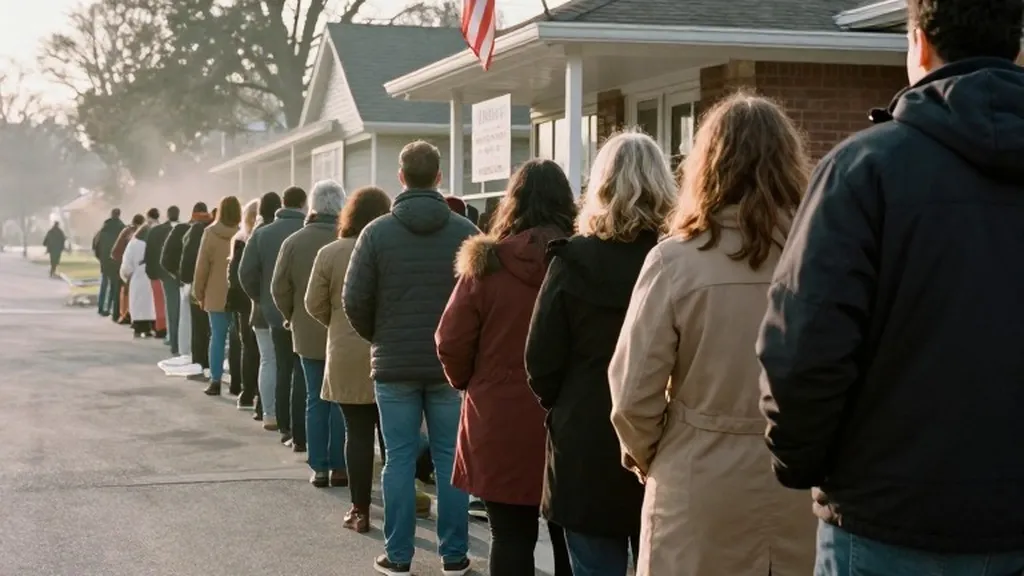
Election Day arrives with the entire map of American power on the ballot, as voters decide the fate of 35 Senate seats and 36 governorships. These races define who controls the levers of state government and the upper chamber of Congress for the next six years. The Associated Press describes the moment as a referendum on President Donald Trump's second term, with citizens weighing high prices and an unpopular war with Iran against their loyalty to the administration. The outcome will determine whether Republicans maintain their current dominance or if Democrats seize a foothold in either chamber.
In the Senate, Democrats need a net gain of four seats to claim a majority, while Republicans can afford to lose only two. Thirteen races are considered battlegrounds, spanning a wide range of political leanings. In Maine, Senator Susan Collins faces a tough challenge from former state Senate President Troy Jackson, as the state leans Democratic. The AP notes that economic strain and tariffs have made this race highly competitive, with all major ratings calling it a toss-up. Meanwhile, in Georgia, Senator Jon Ossoff campaigns against Republican Representative Mike Collins in a state that voted for Trump by 2.2 percent in 2024.
The fight for the House of Representatives involves all 435 seats, with Republicans holding 218 and Democrats 214. Democrats need a net gain of three districts to take control, a hurdle that makes every swing district critical. Ballotpedia identifies 46 battleground districts, including 25 held by Democrats and 21 by Republicans. Many of these districts voted for President Trump in 2024, creating a complex landscape where local dynamics may diverge from national trends. The new congressional maps in states like California, Florida, and Texas add another layer of uncertainty to these contests.
Governor races offer a different set of stakes, with 36 offices up for grabs. Republicans currently hold 26 governorships, but Democrats hold 18 of the 36 offices on the ballot, giving them a chance to flip the balance. In Georgia, Republican health care executive Rick Jackson faces Democratic former Atlanta Mayor Keisha Lance Bottoms in a race to succeed Brian Kemp. The AP highlights this as a key contest, with Bottoms aiming to bring a progressive voice to the state. In Nevada, Republican Governor Joe Lombardo defends his seat against Democratic Attorney General Aaron Ford, adding another layer of complexity to the western region's political shift.
In Ohio, the special Senate election pits former Senator Sherrod Brown against incumbent Senator Jon Husted. The AP reports that this race is closely watched due to the state's importance in the Midwest. In Michigan, Republican former Representative Mike Rogers competes against Democrat Abdul El-Sayed, with El-Sayed's former primary opponent Haley Stevens recently endorsing Rogers. This endorsement adds weight to the Republican side in a state that voted for Trump by a narrow 1.4 percent margin. The Michigan race is rated as a toss-up to lean Democratic, making it a crucial battleground for Senate control.
Texas presents a significant challenge for Democrats, with Republican Attorney General Ken Paxton facing Democrat James Talarico. Trump backed Paxton over Senator John Cornyn in the primary, signaling strong support for the incumbent party's pick. The AP notes that this race is critical for Republicans, as losing Texas would be a major blow to their hold on the South. In North Carolina, former Governor Roy Cooper faces former Republican National Committee chair Michael Whatley for the seat vacated by Thom Tillis. Tillis retired after clashing with Trump, leaving a void that both parties are eager to fill.
The mood among voters is mixed, with AP-NORC polling showing 35 percent of adults approving of Trump's job performance. About seven in ten say the country is heading in the wrong direction, with most blaming the president for high prices. More than 57 million people had already voted as of Monday, surpassing early vote totals from four years ago in many states. This high turnout suggests a deeply engaged electorate, with independents and moderates playing a decisive role in close races. The AP notes that one or two seats could tip either chamber, making every vote count.
Republicans are bracing for the possibility of losing the House, while Democrats are cautiously optimistic about their chances. RNC Chairman Joe Gruters stated that everything depends on turnout, emphasizing the need to mobilize their base. DCCC Chair Rep. Suzan DelBene countered that the American people are angry and want change. These quotes reflect the strategic focus of both parties, with Republicans aiming to hold the Senate and Democrats hoping to take at least one chamber. The outcome of these races will shape the legislative agenda for the final two years of Trump's term.
The financial aspect of the election is unprecedented, with the 2026 elections likely to be the most expensive in history. Republican committees outraised and outspent their Democratic counterparts, aided by Trump-affiliated groups and Elon Musk. However, at the candidate level, Democrats outraised their opponents. This disparity highlights the different strategies employed by each party, with Republicans focusing on national branding and Democrats on local appeals. The AP analysis of AdImpact data shows that 88.1 percent of Republican TV ad spending went to states Trump won in 2024, indicating a focus on defending core areas.
Voters are also watching the administration's actions regarding election integrity, as federal judges temporarily barred plans to prevent noncitizen voting. Critics argue these measures risk disenfranchising eligible voters, while supporters say they are necessary to ensure fairness. The U.S. Postal Service added hours and staff to ensure mail ballots are counted on time, addressing concerns about delays. These administrative details may influence how voters perceive the process, with some feeling confident in the system and others wary of potential interference. The outcome of these races will be closely monitored by Wall Street, which is concerned about the implications for AI spending and debt ceiling negotiations.